
2026-09-10 · Mike DeLuca
Clearing Debris from Outdoor Units After Fall Leaves Drop
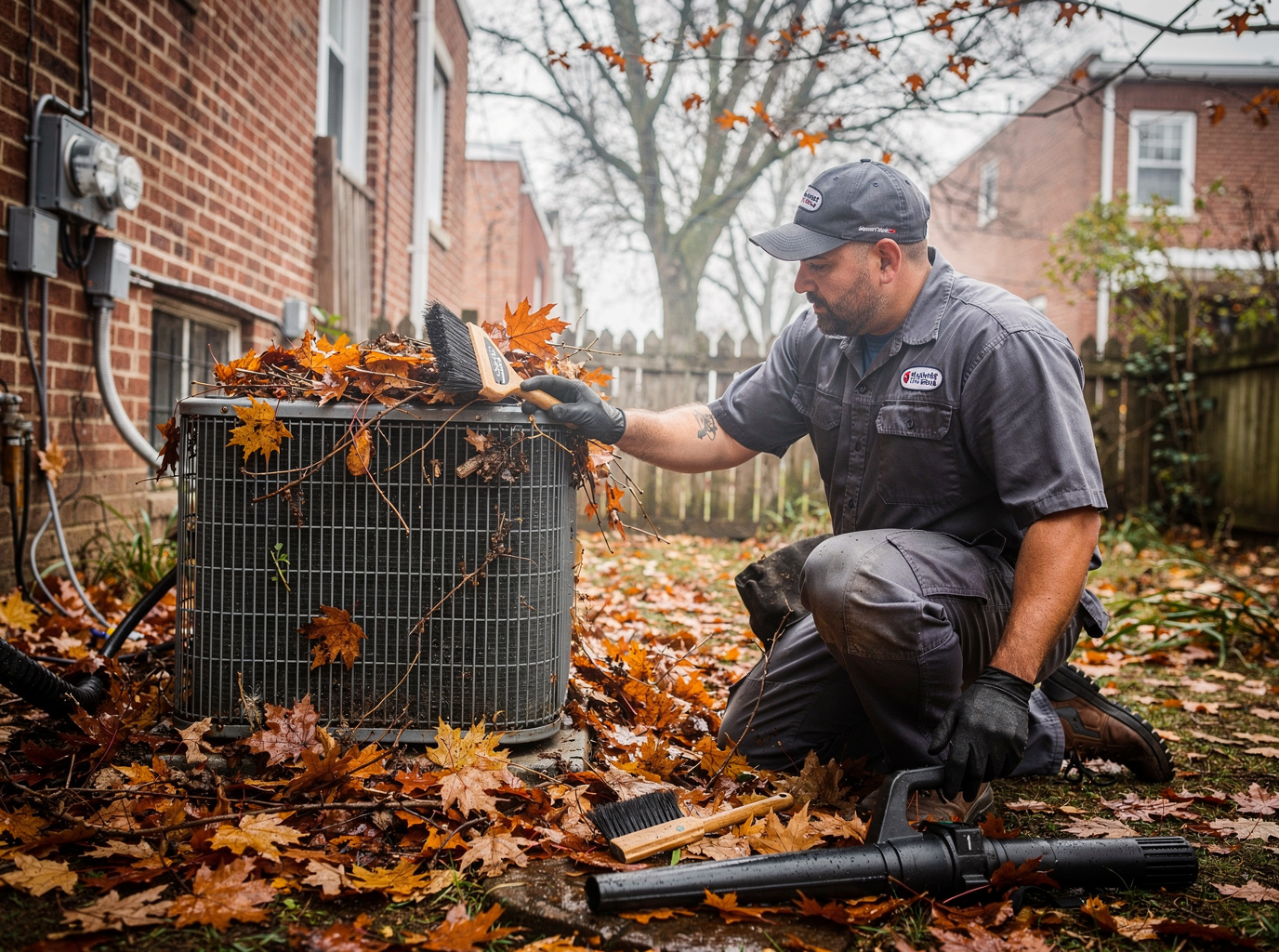
Clearing debris from outdoor HVAC units after fall leaves drop in Philadelphia typically takes 20-45 minutes per unit when performed before the first hard freeze, preventing airflow restrictions that cut efficiency by 15-25% during the shift to heating mode.
Leaf Accumulation Patterns in Philly Row Homes
Philadelphia's older housing stock in neighborhoods such as South Philadelphia, Fishtown, and Kensington features tight side yards and rear patios where maple and oak leaves collect against condensing units. The humid subtropical climate brings heavy autumn rains that mat leaves into dense layers, trapping moisture against coils and fins. In Center City and Northern Liberties, units often sit near fences or under trees that drop foliage for weeks, creating blockages that force the system to work harder once temperatures drop below 40°F. Regular removal avoids ice formation on coils during cold snaps that reach the teens in December and January.
Tools and Timing for Safe Debris Removal
Use a leaf blower on low setting or a soft-bristle brush to loosen material without bending aluminum fins. Disconnect power at the disconnect box first, then gently vacuum fins with a shop vac fitted with a brush attachment. Schedule the task after most leaves have fallen but before the ground freezes, usually late November in West Philadelphia and University City. Avoid high-pressure water that can drive debris deeper into the coil or damage fan blades. In Manayunk and Roxborough, where slopes direct runoff toward units, check for sediment mixed with leaves that can clog the condensate drain.
Protecting Units in Historic and Dense Blocks
Row homes in Germantown and Mount Airy often place outdoor units close to neighboring structures, so debris blows in from multiple directions. After clearing visible leaves, inspect the top fan grille for twigs and acorns that can unbalance the fan motor. In areas near the Benjamin Franklin Parkway or Eastern State Penitentiary, wind patterns funnel leaves into courtyards. Once cleared, replace the access panel securely to keep small animals from nesting during the cold months ahead. HVAC Maintenance visits can include coil cleaning when debris has already compacted.
Efficiency Impacts and Follow-Up Checks
Blocked coils raise operating costs because the system runs longer to maintain indoor temperatures in Philadelphia's cold winters. After clearing, run the system in heating mode and listen for unusual noises that signal remaining obstructions. Homeowners in University City and Queen Village who also manage humidity issues can review related guidance on Managing Humidity in South Philadelphia Row Homes. If fins remain bent or the unit shows corrosion after cleaning, schedule a professional inspection rather than attempting further DIY work.
When Professional Service Becomes Necessary
If leaves have packed inside the cabinet or the fan motor struggles after cleaning, contact a technician familiar with Philadelphia's older stock. Properties considering heat pump retrofits benefit from clean outdoor units, as detailed in Cost Factors for Heat Pump Retrofits in Older Philly Stock. Technicians based at 1203 N 3rd St can respond Monday through Saturday from 7am to 8pm to handle stubborn debris or perform deeper coil washes before winter demand peaks.