
2026-09-10 · Mike DeLuca
Replacing Filters in Homes Near the Schuylkill River
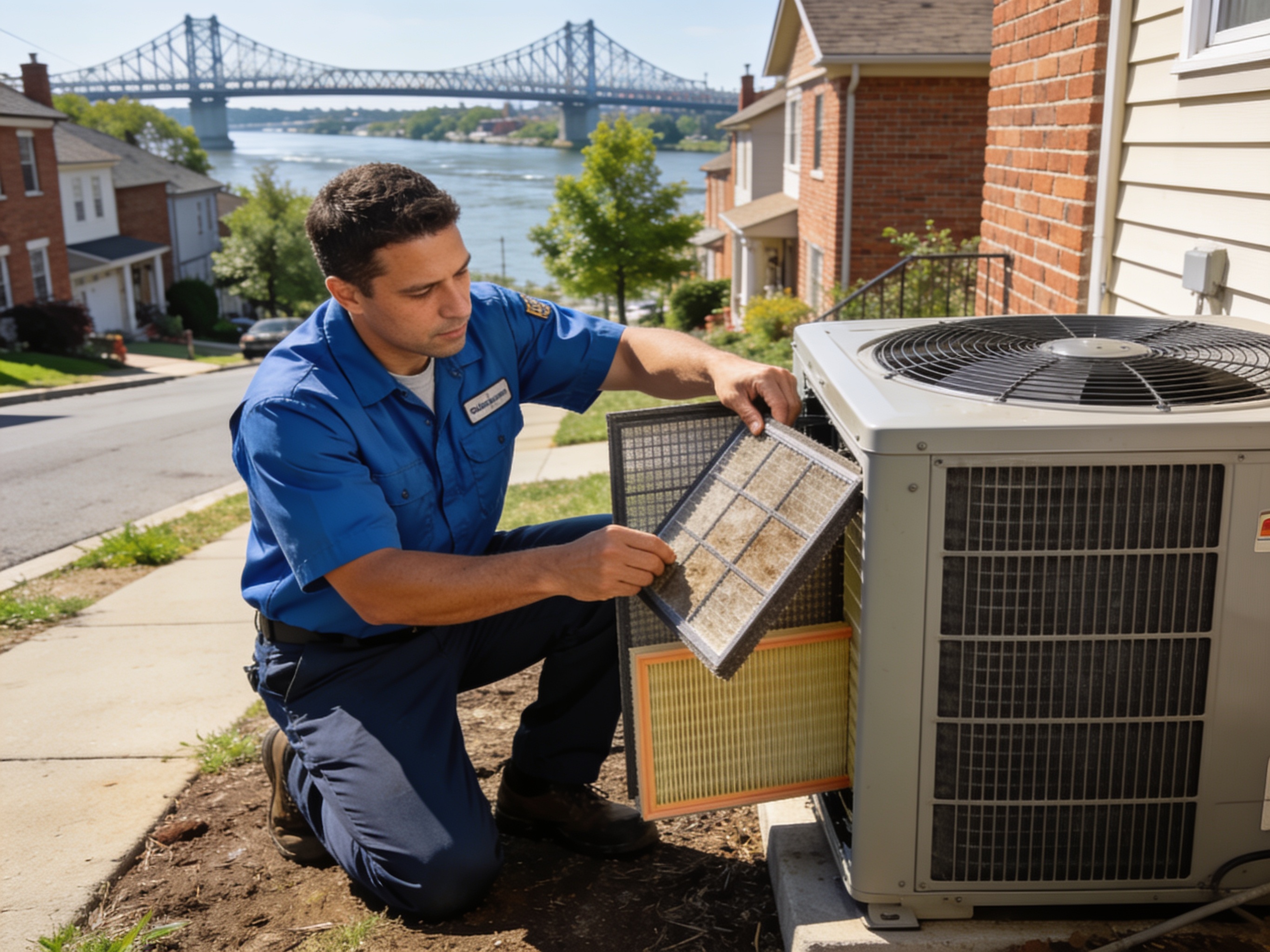
Replace filters every 30 to 45 days in homes near the Schuylkill River. Higher humidity from the waterway, combined with pollen and construction dust common in Center City and University City, loads filters faster than in drier inland spots. This schedule applies to standard 1-inch pleated filters in row homes built before 1950 that dominate neighborhoods like South Philadelphia and Manayunk.
Schuylkill River Humidity and Filter Loading
Philadelphia's humid subtropical climate sends river moisture into nearby homes from spring through fall. In University City and along the Schuylkill Banks, this raises indoor relative humidity above 60 percent on many days, allowing dust and mold spores to cake onto filter media quicker. Older row homes in these zones often have leaky duct runs in basements that pull in additional river-adjacent allergens. Technicians at Green Air Heating & Cooling see filters from Manayunk properties reach full restriction in under a month during peak summer. Checking the filter monthly with a flashlight reveals when the pleats turn gray or the cardboard frame bows. Skipping checks lets restricted airflow strain blower motors in the same homes that already battle summer humidity spikes.
Filter Types Suited to Local Row Homes
Most pre-war Philadelphia row homes near the river use 16x20x1 or 20x25x1 slots. These tight spaces favor MERV 8 or MERV 11 pleated filters that capture river pollen without choking airflow. Higher MERV 13 options work only if the furnace or air handler has been upgraded with a larger blower, which is rare in Kensington and Northern Liberties stock. Homeowners should measure the actual slot before buying; many units in South Philadelphia still hold the original 1-inch frames rather than modern 4-inch or 5-inch media cabinets. Write the install date on the filter edge with a marker so the next check shows exact days of service. Avoid washable electrostatic types in river-adjacent homes because trapped moisture breeds bacteria on the reusable mesh.
Step-by-Step Replacement in Philadelphia Homes
Turn the system off at the thermostat before opening the filter compartment door. Slide the old filter straight out to avoid dumping debris into the return plenum common in Fishtown and Roxborough basements. Note the airflow arrow direction printed on the frame and match it on the new filter. Insert the fresh filter fully so the seal sits flat against the rails; gaps let unfiltered air bypass the media. Restore power and run the fan for two minutes, then recheck for proper seating. Residents in Germantown and Mount Airy with multi-story returns should label each filter location because river humidity affects upper and lower levels differently. Keep a small stock of the correct size on a basement shelf to avoid last-minute store trips during heat waves.
When Professional Help Makes Sense
Persistent odors or visible mold on the filter after 30 days signal the need for Air Filter Replacement Service rather than homeowner changes alone. Systems in older University City homes sometimes develop condensation on the return duct that soaks the filter edge; a technician can add insulation or adjust blower speed. Pair filter work with HVAC Maintenance visits scheduled around Philadelphia street cleaning days to keep coils clean. For row homes already struggling with moisture, the article Managing Humidity in South Philadelphia Row Homes explains how filter condition ties into whole-house dehumidification choices. Track filter life across seasons to spot when river proximity or nearby construction projects increase loading.