
2026-09-10 · Mike DeLuca
Clearing Condensate Drains After Heavy Summer Rain
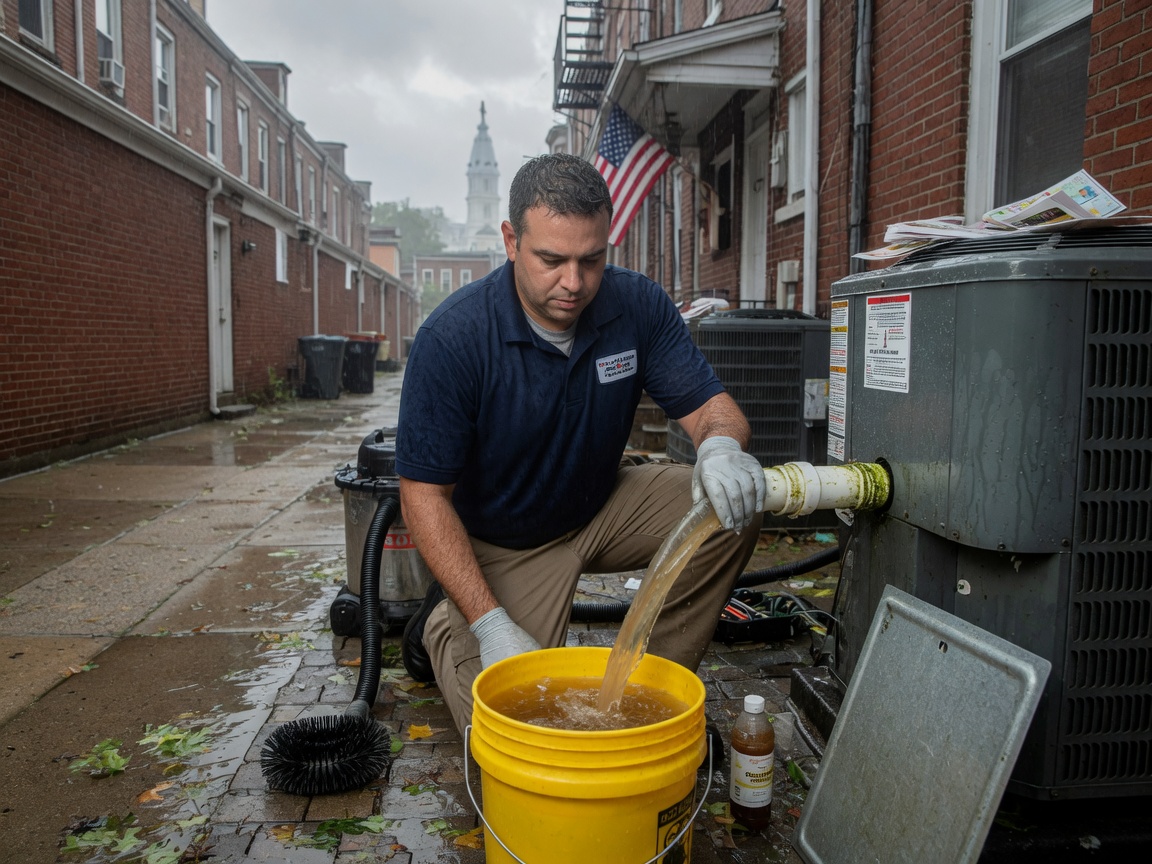
After heavy summer rain in Philadelphia, clearing a clogged condensate drain typically takes 30 to 90 minutes using a wet vac or vinegar flush on accessible lines in row homes. The process starts by locating the drain near the indoor evaporator coil, then removing standing water and debris that accumulate faster in the region's hot, humid conditions. Philadelphia's older housing stock, with tight mechanical closets in South Philadelphia and North Philadelphia, often places these lines in spots prone to algae growth during July and August downpours.
Why Summer Storms Clog Drains Faster Here
Philadelphia's humid subtropical climate brings frequent heavy rain that overloads condensate lines already handling high humidity levels. Row homes in South Philadelphia and Kensington feature narrow basements where lines run longer distances to exterior drains, collecting sediment from decades-old plumbing. The same moisture that boosts cooling loads also feeds algae and mold inside the PVC pipe, turning a slow drip into a backup that can leak onto floors near the Liberty Bell Center area or University City apartments. Homeowners near the Schuylkill River see extra silt in the water table that finds its way into ground-level drains during storms.
Tools and Safety Steps Before Starting
Gather a wet/dry vacuum, 1 gallon of white vinegar, a funnel, and gloves before opening any access point. Shut off power to the air conditioner at the breaker to avoid electrical contact with water. In Fishtown and Northern Liberties homes, check for low-clearance ceilings that may require a step stool rather than a ladder. Always wear eye protection because pressurized water can spray when the line releases. These precautions prevent minor clogs from turning into larger water damage issues common in Philadelphia's dense blocks.
Step-by-Step Clearing Process
- Locate the condensate line outlet, usually a white PVC pipe exiting near the outdoor unit or into a floor drain. 2. Attach the wet vac hose to the line end and run it for 2 to 3 minutes to pull out water and loose debris. 3. Pour 2 cups of vinegar into the line at the indoor access point and let it sit 15 minutes to break down algae. 4. Flush with a quart of water and recheck flow at the outlet. Repeat once if flow remains slow. This method works reliably on the 3/4-inch lines found in most Center City and Manayunk properties without needing chemical cleaners.
Preventing Recurring Clogs in Philadelphia Homes
Install a float switch on the drain pan to shut the system down before overflow occurs, a common upgrade during HVAC Maintenance visits. Schedule vinegar flushes every 30 days from June through September when humidity peaks. In Germantown and Mount Airy homes with older systems, consider adding a condensate pump with a larger reservoir to handle storm surges. Readers dealing with year-round moisture issues can also review managing humidity in South Philadelphia row homes for complementary strategies. These habits reduce emergency calls during peak summer.
When Professional Help Is Needed
If the line remains blocked after two vinegar treatments or water backs up into the furnace closet, contact a technician. Persistent issues often trace to collapsed lines in Roxborough basements or root intrusion near older West Philadelphia properties. Green Air Heating & Cooling operates from 1203 N 3rd St, Philadelphia, PA 19122 and is available Mon–Sat 7am–8pm for these repairs. For winter comparisons, see handling frozen condensate lines in Manayunk winters. Prompt attention keeps systems running through the next storm cycle.