
2026-09-10 · Mike DeLuca
Handling Frozen Condensate Lines in Manayunk Winters
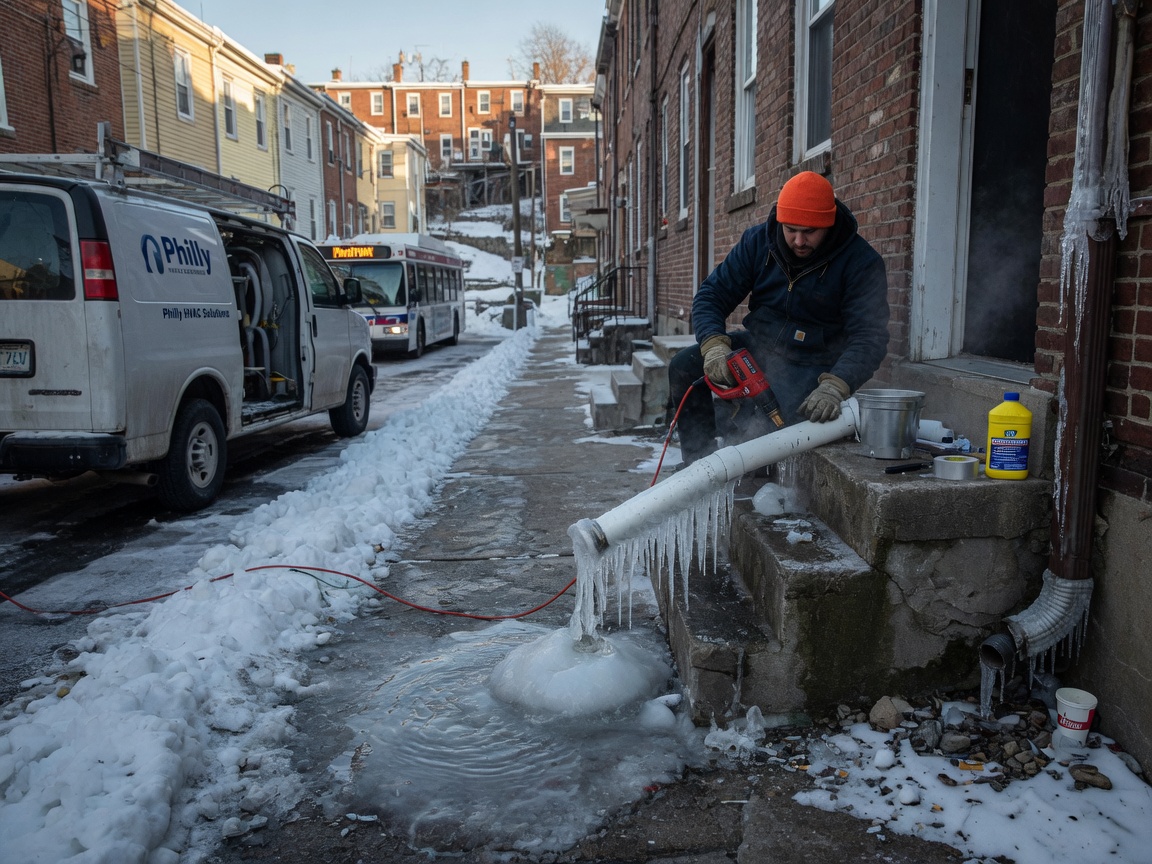
Frozen condensate lines in Manayunk typically thaw safely within 30-60 minutes when addressed with warm water or gentle heat, but repeated freezing often signals missing insulation on the drain line exposed to sub-freezing nights along the Schuylkill riverfront.
Why Manayunk Homes See More Frozen Lines
Manayunk's older row homes built on hilly terrain near the river trap cold air in basements and crawl spaces longer than flatter neighborhoods like Fishtown. High-efficiency furnaces produce acidic condensate that must drain outside, yet the 20-30 degree winter swings common in Philadelphia let lines freeze overnight when temperatures drop below 25°F. Narrow alleys and tight setbacks limit sun exposure on exterior drains, turning a simple PVC line into an ice plug by morning. Homeowners in these 1920s-1950s structures often route drains through unconditioned spaces that stay colder than the main living areas.
Recognizing the Problem Early
Water backing up into the furnace secondary heat exchanger or a shut-off switch trip usually appears first. Listen for gurgling at the drain or notice the unit cycling off before reaching set temperature on the thermostat. In Manayunk's dense blocks, ice may form visible bulges on the exterior PVC where it exits near ground level. Check the condensate pump if your system uses one; frozen discharge lines there stop flow just as quickly as the main drain.
Safe Thawing Steps for Winter Conditions
Turn off the furnace at the thermostat before starting. Pour warm (not boiling) water slowly into the cleanout tee nearest the furnace to melt the ice plug from inside. Wrap the exterior line with heat tape rated for outdoor use and plug it into a GFCI outlet to prevent refreezing during the next cold front. Never use open flame or steamers on PVC, as these warp the pipe and create leaks once temperatures rise. After clearing, run the furnace for 15 minutes and confirm steady flow into the floor drain or outside termination.
Prevention That Matches Philadelphia Winters
Insulate the full run of condensate line with ½-inch closed-cell foam where it travels through unheated spaces or exits the home. Slope the line at least ¼ inch per foot toward the termination to keep water moving even when temperatures hover near freezing. Schedule HVAC maintenance before November so a technician can verify the drain heater and secondary heat exchanger condition. In neighborhoods like Roxborough and Germantown with similar exposure, adding a small condensate pump with built-in heat often solves recurring issues in older stock.
For ongoing protection, consider routing the line through conditioned space when possible or installing a furnace repair kit that includes a heated drain. These steps reduce emergency calls during January cold snaps that routinely reach the teens in Philadelphia.
When Professional Help Makes Sense
If thawing does not restore flow or the furnace shows error codes after clearing, contact a local contractor. Persistent freezing can indicate a cracked secondary heat exchanger or improper trap design common in retrofitted systems. Green Air Heating & Cooling serves Manayunk from its base at 1203 N 3rd St and maintains hours Monday through Saturday 7am–8pm for these exact winter issues. Readers dealing with summer drain clogs may also find value in our guide on clearing condensate drains after heavy summer rain.