
2026-09-10 · Mike DeLuca
Choosing the Right Filter MERV Rating for Philly Pollen Seasons
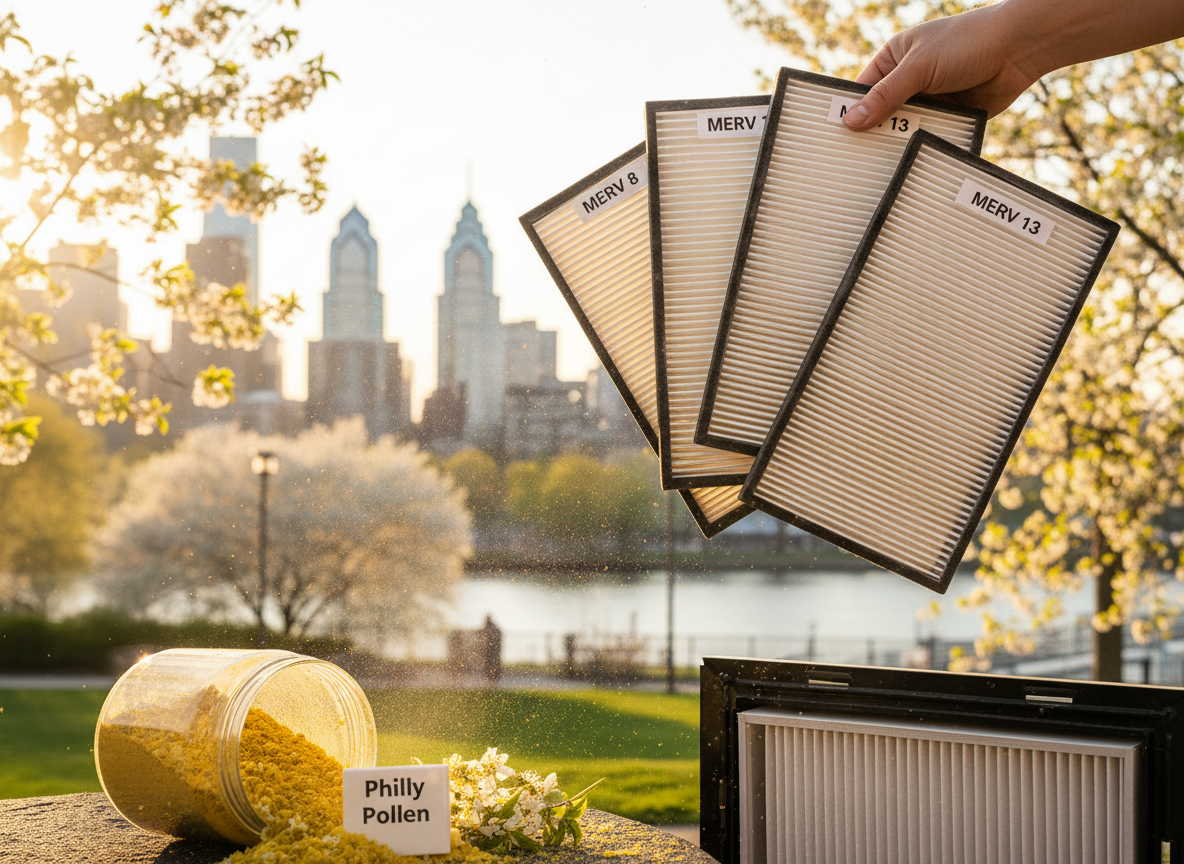
For Philadelphia's pollen seasons, a MERV 11–13 rating captures tree, grass, and ragweed particles effectively while preserving airflow in typical local systems. Higher ratings like MERV 14+ can restrict older furnaces common in North Philadelphia and Kensington row homes, leading to higher energy use during hot summers. Lower options below MERV 8 allow too much pollen through in spring when counts spike near the Schuylkill River.
Understanding Philly Pollen Seasons and Local Climate
Philadelphia's humid subtropical climate brings hot, humid summers and cold winters that extend pollen exposure from March through October. Tree pollen peaks first in spring across University City and Germantown, followed by grass in early summer near Benjamin Franklin Parkway and ragweed in fall around Mount Airy. These patterns interact with frequent humidity that keeps particles airborne longer, so filters must handle both coarse and fine allergens without clogging quickly. Homes built before 1950 in South Philadelphia often have tighter ductwork that benefits from mid-range MERV ratings to avoid pressure drops during peak summer demand. Residents in Manayunk and Roxborough notice heavier loads near wooded slopes where pollen settles into basements and attics.
Matching MERV Ratings to Philadelphia Housing Stock
Row homes and twins in West Philadelphia and Fishtown typically run 80–100 year old forced-air systems that perform best with MERV 11 filters changed every 60–90 days. Newer builds in Northern Liberties handle MERV 13 without issue, catching 90% of 1-micron pollen while supporting heat pumps. In older stock, jumping straight to MERV 16 often causes blower strain during winter cold snaps when systems run longer. Always measure filter slot depth first—most Philadelphia units accept 1-inch or 4-inch pleated filters rated for the specific MERV level.
Practical Steps for Filter Selection and Replacement
Start by checking your current filter's MERV number and noting pollen symptoms in rooms with return vents. Select a pleated filter in the 11–13 range sized exactly to your slot to prevent bypass. Replace it on a schedule tied to local seasons: every 45 days from March to June and September to October, then every 90 days in winter. Pair this with air filter replacement service when access panels are hard to reach in tight Kensington basements. Test airflow after installation by feeling strong return at vents.
When to Add Indoor Air Quality Testing
Persistent allergy issues in Center City apartments or homes near Eastern State Penitentiary warrant indoor air quality testing to measure actual pollen counts inside. Testing reveals whether MERV 11 suffices or if a MERV 13 upgrade plus ventilation adjustments are needed. Results often show river-adjacent properties in Queen Village carry higher outdoor infiltration, guiding precise filter choices rather than guesswork.
Connecting Filter Choices to Year-Round System Care
Proper MERV selection reduces strain on equipment during Philadelphia's temperature swings and pairs naturally with seasonal maintenance. Homeowners near the Schuylkill benefit from reading replacing filters in homes near the Schuylkill River for river-specific humidity effects. During July peaks, the same filters support reducing energy use during peak summer demand by keeping coils clean. Track changes over one full pollen cycle before adjusting ratings again.