
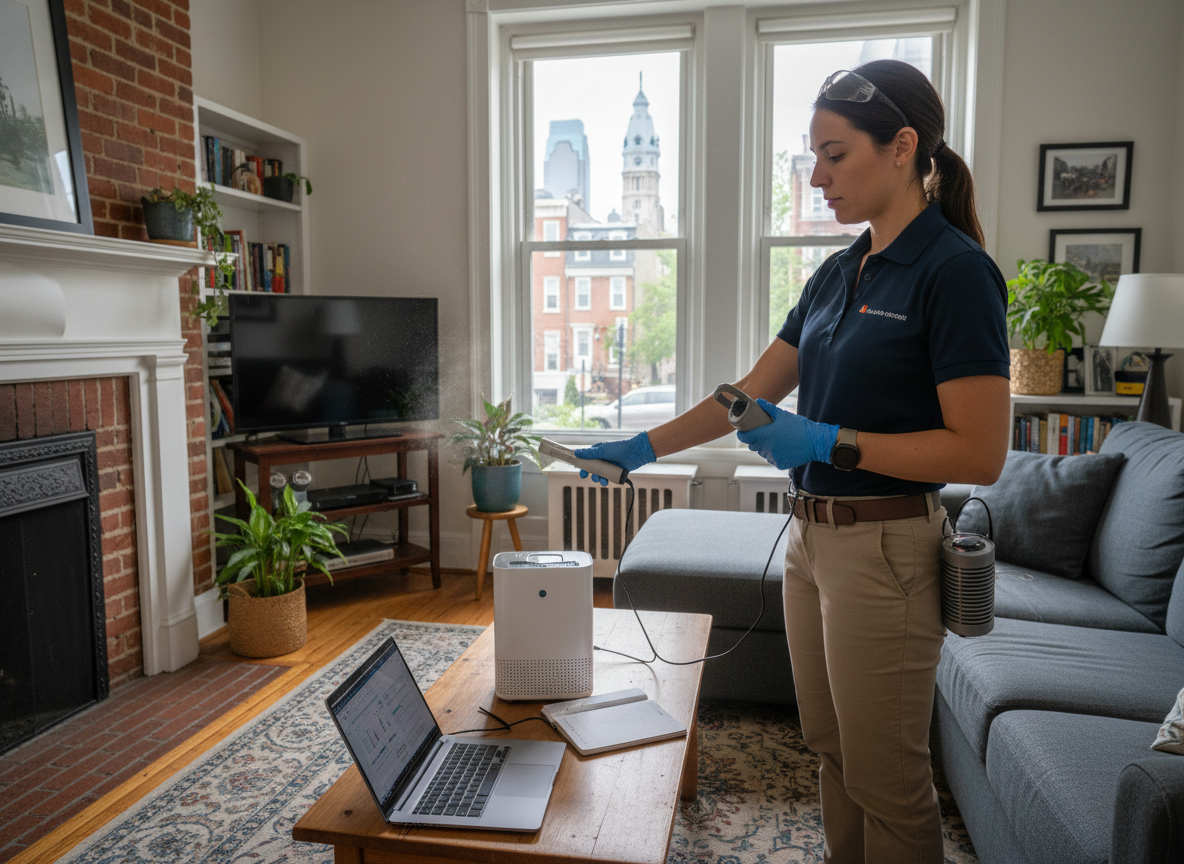
Philadelphia's humid subtropical climate brings hot, muggy summers and freezing winters that drive moisture through brick and stone row homes common in Fishtown, Kensington, and Northern Liberties. These structures often lack modern vapor barriers, so condensation collects in wall cavities and crawl spaces during temperature swings. Testing must account for this seasonal cycling rather than one-time snapshots, especially in homes near the Delaware River where soil moisture adds another load.
Many Center City and South Philadelphia properties still rely on original ductwork or gravity vents that pull in street-level pollutants from nearby traffic corridors. Carbon monoxide from aging furnaces and volatile compounds from older building materials concentrate quickly in these smaller footprints. Field sampling needs to include both occupied spaces and mechanical rooms, because leaks in shared party walls between adjacent row homes can cross-contaminate readings.
University City and Manayunk homes built on sloped terrain often have half-basements that stay damp year-round. Mold spores and dust mites thrive in these conditions and circulate through forced-air systems when heat kicks on in November. Proper testing protocols include surface swabs alongside air samples and placement of monitors at multiple levels to catch stratification that single-point tests miss.
West Philadelphia and Germantown properties frequently retain knob-and-tube wiring and unlined chimneys that introduce additional particulates. Any IAQ assessment here must coordinate with combustion safety checks because negative pressure from exhaust fans can pull exhaust gases indoors during winter operation.
Technician insight
In Philadelphia, the thing that catches most people out with Indoor Air Quality Testing is how row-home party walls in neighborhoods like Kensington let moisture and odors migrate between units, so a single-home test can miss the real source until you check the adjacent basement or attic space.
Fishtown Row Home With Persistent Musty Odor
Homeowner in a 1920s Fishtown row house reported musty smells that worsened after humid summer weather. Testing revealed elevated mold spores in the second-floor supply ducts and hidden moisture in the shared basement wall. We isolated the source to a neighbor's leaking downspout, sealed the ductwork, and installed a dehumidifier tied to the existing system, eliminating the odor within two weeks.
Indoor Air Quality Testing Services We Offer
✓Mold Spore and Allergen Testing
Air and surface sampling for mold and common allergens in Philadelphia row homes where humidity from hot summers and cold winters promotes growth behind plaster walls.
✓VOC and Chemical Pollutant Screening
Detection of volatile organic compounds from older building materials and household products that accumulate in tightly sealed Fishtown and Northern Liberties properties.
✓Carbon Monoxide and Combustion Gas Testing
Targeted checks for CO and other furnace byproducts in homes with shared chimneys common throughout South Philadelphia and Kensington.
✓Ductwork and System Contamination Assessment
Inspection of supply and return ducts for dust, microbial growth, and debris that recirculates through older systems in Center City and University City row houses.
✓Humidity and Moisture Mapping
Placement of data loggers to track relative humidity swings that affect indoor comfort and material integrity during Philadelphia's seasonal extremes.
Indoor Air Quality Testing Cost in Philadelphia, PA
| Service | Typical Range | What Affects It |
|---|---|---|
| Basic IAQ Screening | $225–$375 | Single-location air sample plus humidity check; common for smaller South Philadelphia row homes. |
| Mold And Allergen Panel | $350–$550 | Multiple samples plus surface swabs; price rises with number of floors and crawl-space access. |
| Comprehensive VOC And Combustion Test | $450–$700 | Full home scan including CO and chemical compounds; higher in multi-unit buildings. |
| Follow-Up Monitoring | $150–$250 | Placement and retrieval of data loggers after initial remediation. |
Ranges are typical for Philadelphia, PA and confirmed with an exact written quote before any work starts.
How it works
- 1
Site Walkthrough And History Review
Technician inspects the full property, notes HVAC layout, recent renovations, and any odor or symptom reports from occupants.
- 2
Strategic Sampling Plan
Placement of air, surface, and particle monitors at multiple elevations and near potential sources based on the home's construction and orientation.
- 3
Laboratory Analysis
Samples sent to accredited labs for spore counts, VOC panels, and allergen identification with turnaround in 48 to 72 hours.
- 4
Detailed Report And Recommendations
Written findings include measured levels, comparison to guidelines, and prioritized next steps tailored to Philadelphia building stock.
Pricing
Cost depends on number of test types, home size, and whether continuous monitoring is required.