
2026-09-10 · Mike DeLuca
How to Spot Ductwork Leaks in Historic Philadelphia Properties
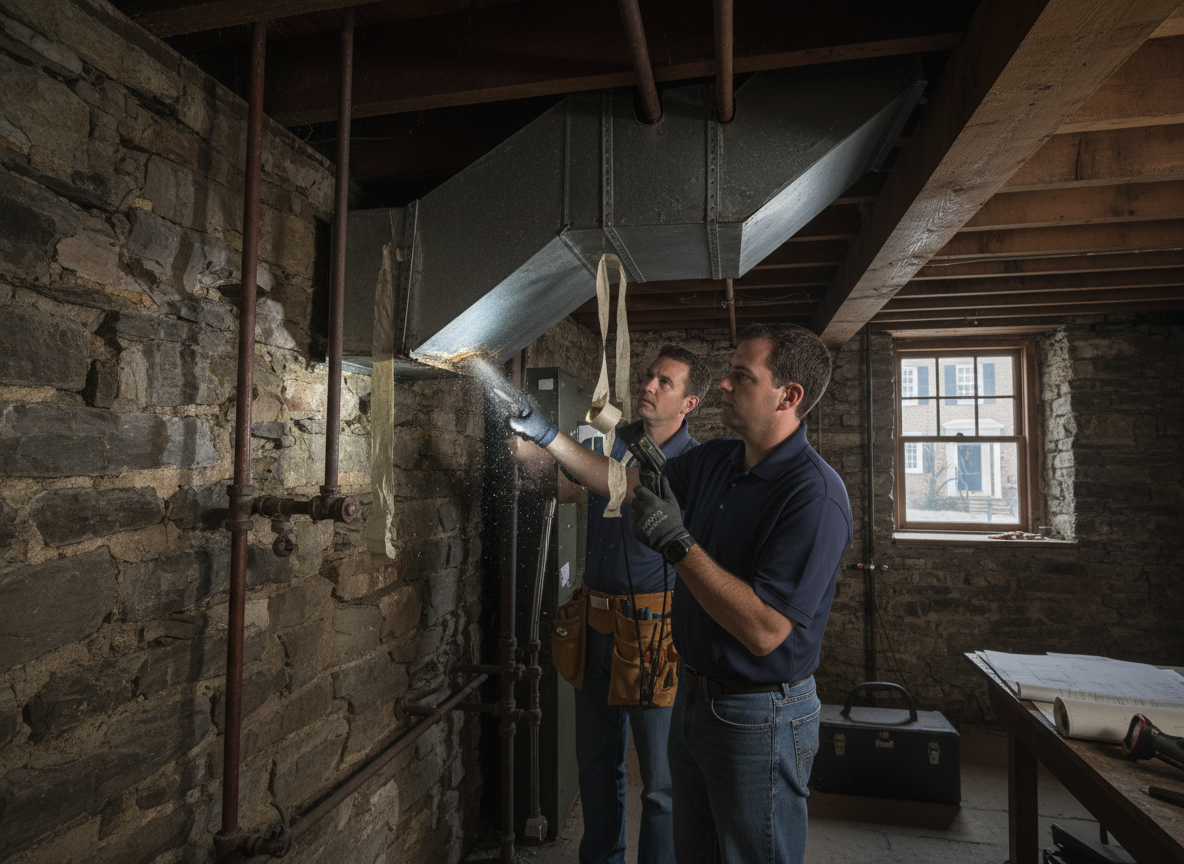
In historic Philadelphia row homes, ductwork leaks typically reveal themselves through uneven room temperatures of 5–10 degrees between floors or monthly energy bills that climb $40–$80 higher than expected during peak seasons.
Common Signs in Older Row Houses
Philadelphia's housing stock from the 1800s and early 1900s often features narrow duct runs through plaster walls and tight basements in neighborhoods such as Society Hill and Old City. Homeowners notice dust buildup around floor registers or musty odors when the system runs. In summer humidity, leaks pull moist air into the ducts, raising indoor humidity levels and forcing the AC to work harder. Winter cold snaps below 30 degrees make gaps obvious as heated air escapes before reaching upper floors. These patterns differ from newer construction because original galvanized ducts corrode at seams after decades of exposure to the region's freeze-thaw cycles.
Checking Attics and Crawl Spaces
Many Center City and Northern Liberties properties have accessible but unconditioned attic spaces where ducts run. Shine a flashlight along joints and look for gaps wider than 1/8 inch or loose tape that has dried out. Feel for air movement with your hand while the blower runs; even small leaks create noticeable drafts. In Mount Airy and Germantown homes with stone foundations, check where ducts pass through exterior walls—soil moisture often accelerates rust at those points. Document any sections showing white or green corrosion before scheduling repairs.
Listening and Temperature Testing
Run the system on high and walk through each room. Whistling or hissing near walls indicates pressurized leaks. Use an infrared thermometer to measure supply air at the register versus the main trunk line; a drop of more than 3 degrees points to leakage along the path. In South Philadelphia and Kensington row houses, test during both heating and cooling modes because the same duct may leak differently under positive or negative pressure. Consistent cold spots on ceilings in summer or warm spots in winter confirm the issue without needing specialized equipment.
Philadelphia Climate Effects on Duct Integrity
The humid subtropical climate brings hot, sticky summers and winters that dip into the teens, stressing metal ducts through repeated expansion and contraction. Properties near the Delaware River in Fishtown and Northern Liberties see additional corrosion from higher moisture levels. These conditions shorten the life of unsealed joints compared with drier regions. Regular HVAC Maintenance helps catch early deterioration before leaks force full Ductwork Installation in tight historic layouts.
Next Steps for Property Owners
Once leaks are confirmed, compare findings with a simple smoke test using incense sticks near suspected joints. For homes in University City or Manayunk with complex multi-story duct runs, professional tools provide clearer mapping. Review the Winter Thermostat Settings That Work in Philly Row Houses to understand how leaks compound heating costs during cold months. Addressing gaps promptly prevents higher utility usage and maintains even comfort across the property's original floor plan.