
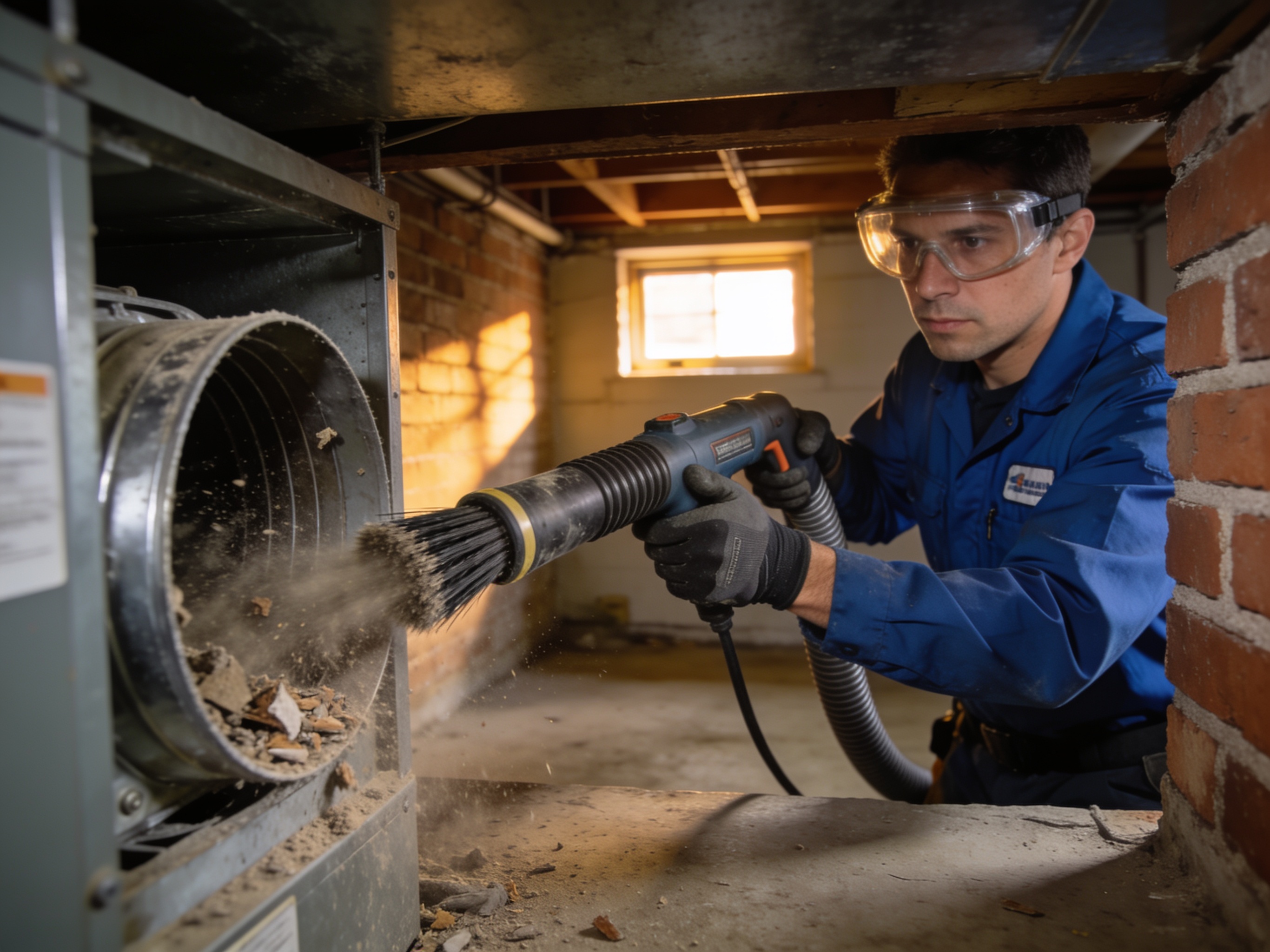
Philadelphia row homes in South Philadelphia, Kensington, and Fishtown often feature narrow, multi-story duct runs installed decades ago that trap construction dust, pet hair, and pollen carried in from the Delaware River corridor. Humid subtropical summers drive heavy air-conditioning use, which condenses moisture inside metal and flex ducts and encourages mold growth along the cooler sections near the roofline. Winter heating cycles then push that growth through registers into living spaces. Technicians must navigate tight crawl spaces and shared party walls without disturbing neighbors, using negative-air machines sized for the limited access typical of these blocks.
In West Philadelphia and Germantown, larger single-family homes from the early 1900s frequently combine original galvanized ducts with later flexible runs added during renovations. These mixed systems create turbulence points where debris collects, especially near the Philadelphia Museum of Art corridor where street dust and construction from ongoing projects increases particulate load. Cleaning crews isolate each branch, remove registers, and brush then vacuum to avoid pushing material into wall cavities. Post-clean verification includes checking static pressure to confirm airflow has returned to design levels without creating new leaks at old seams.
University City and Manayunk properties near the Schuylkill River face additional challenges from higher humidity and occasional flooding that can introduce silt into basement returns. Technicians inspect for water stains on duct exteriors before starting and use antimicrobial fogging only where visible growth exists, following local mechanical code requirements for occupied spaces. This approach prevents unnecessary chemical use while addressing the real moisture issues that recur every spring.
Northern Liberties and Northern Philadelphia commercial spaces often run combined residential and light-industrial ductwork serving both offices and ground-floor retail. These systems require staged cleaning to keep businesses open, with work scheduled around Reading Terminal Market delivery hours when possible. Crews document before-and-after photos of each trunk line so property managers can see exactly what was removed.
Technician insight
In Philadelphia row homes the thing that catches most people out with duct cleaning is how shared party walls and narrow chases in neighborhoods like Kensington force us to work from one side only, so we spend extra time sealing the opposite wall registers to keep negative pressure from pulling debris into the neighbor's system.
South Philadelphia Row Home
A three-story row home near Citizens Bank Park had persistent musty smells after heavy summer AC use. Inspection showed condensation lines in the second-floor flex ducts where cold winter air had met humid summer airflow. Crews isolated the shared wall, brushed and vacuumed each branch, and confirmed airflow improvement before leaving the registers in place.
Duct Cleaning Services We Offer
✓Whole-Home Duct Cleaning
Removes accumulated dust, pollen, and construction debris from every supply and return run in row homes and single-family houses across Center City and surrounding neighborhoods.
✓Dryer Vent Cleaning
Clears lint buildup from vent lines that run through exterior walls in South Philadelphia and Fishtown row homes, reducing fire risk and improving dryer efficiency during humid summers.
✓Commercial Duct Cleaning
Services multi-tenant buildings and retail spaces in Northern Liberties and University City using negative-air equipment sized for larger trunk lines and after-hours scheduling.
✓Post-Renovation Duct Cleaning
Extracts drywall dust and insulation fibers from ducts after kitchen or bathroom remodels common in Kensington and Manayunk historic properties.
✓Bathroom Exhaust Duct Cleaning
Targets moisture-laden exhaust lines that serve second-floor baths in older West Philadelphia homes where condensation leads to mildew odors.
Duct Cleaning Cost in Philadelphia, PA
| Service | Typical Range | What Affects It |
|---|---|---|
| Typical row-home duct cleaning | $450–$750 | Two-story homes with standard trunk access; tight Kensington blocks may add time |
| Larger single-family home | $650–$950 | West Philadelphia or Mount Airy properties with mixed duct materials |
| Dryer vent only | $150–$275 | Exterior wall run under 25 feet; longer runs through multiple floors increase cost |
| Commercial space under 2,000 sq ft | $800–$1,400 | After-hours work in Northern Liberties retail adds scheduling premium |
Ranges are typical for Philadelphia, PA and confirmed with an exact written quote before any work starts.
How it works
- 1
System Inspection
Technicians examine accessible ducts, registers, and the furnace or air-handler cabinet to identify access points and any water damage common in Philadelphia basements.
- 2
Register and Vent Removal
All floor and wall registers are taken out and cleaned separately so debris does not fall back into the system during brushing.
- 3
Agitation and Vacuum Extraction
Rotating brushes and compressed-air whips loosen material while a high-volume vacuum draws it out through the main trunk, protecting neighboring units in row-home blocks.
- 4
Sanitization and Final Check
Where needed, an EPA-registered fog is applied only to visibly affected sections, followed by airflow testing to confirm restored performance.
Pricing
Most Philadelphia row homes fall in the mid-range; larger or mixed-use properties require on-site assessment for accurate pricing.