
2026-10-28 · Tony DeLuca
What to Expect When Replacing an Old Boiler in Center City
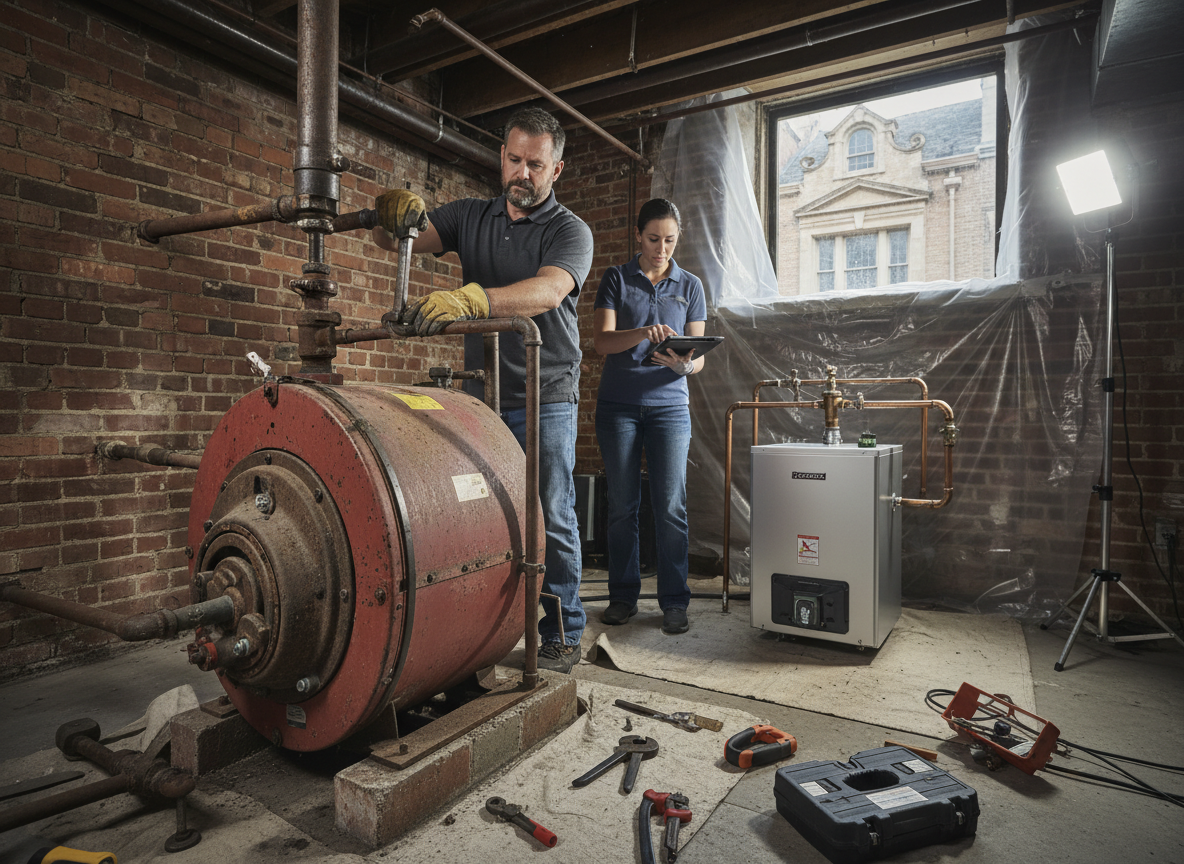
Replacing an old boiler in Center City typically takes three to five days once the unit arrives, starting with a full assessment of the existing steam or hot water system and ending with testing under load during a cold snap. Older row houses in this neighborhood frequently feature gravity-fed piping and limited mechanical rooms that require custom fitment rather than off-the-shelf swaps. Philadelphia winters push these systems hard, so the replacement must restore even heat distribution across multiple floors without creating new pressure issues in shared walls.
Assessing the Existing System in Historic Row Houses
Center City properties built before 1950 often retain original cast-iron boilers or early conversion units that no longer meet current efficiency needs during prolonged cold periods. A thorough inspection checks for leaks at the return lines, sediment buildup in the expansion tank, and corrosion along the main header that runs through the basement. Many of these homes share party walls, so technicians measure combustion air supply and draft to avoid pulling air from adjacent units. Homeowners should also review the condition of the radiators on upper floors, since uneven heating often signals trapped air or blocked returns that must be addressed at the same time. Boiler service records help identify recurring issues that a new unit can resolve.
Preparing the Space and Utilities
Tight Center City basements require clearing a clear path for equipment removal and new unit placement, often through narrow stairwells or alley access points. Electrical service must be verified for the new boiler's requirements, and gas lines checked for proper sizing if switching from oil. In neighborhoods like Society Hill or Old City, permits may involve historic review, which extends the timeline by a week or more. Water quality in Philadelphia can introduce minerals that affect new heat exchangers, so flushing the entire loop before startup prevents early scaling. Scheduling the work between late fall and early winter avoids the peak demand period when temperatures drop below freezing.
Installation Steps and System Integration
Technicians first isolate and drain the old boiler, then cut out sections of piping that no longer meet code or fit the new footprint. The replacement unit is positioned on a level pad with proper clearance for service access, followed by reconnection of supply, return, and venting. Controls are updated to match modern thermostats while preserving the existing radiator zones common in these homes. After refilling and bleeding air from every radiator, the system runs through a full combustion analysis to confirm safe operation. Properties near the Benjamin Franklin Parkway or Independence Hall area often need extra attention to noise levels because of close neighboring buildings. Boiler repair teams frequently handle follow-up adjustments once the first cold front arrives.
Post-Installation Checks and Seasonal Performance
After startup, the new boiler should maintain steady pressure and temperature across all zones even when outside temperatures fall into the teens. Homeowners in Center City benefit from checking radiator valves and bleed screws before each heating season begins. Linking the system to a programmable thermostat helps manage energy use during milder shoulder months while still delivering reliable heat on the coldest days. For row houses that also have ducted areas, reviewing how to spot ductwork leaks in historic Philadelphia properties prevents heat loss that undermines the boiler's performance. Regular filter changes and annual inspections keep the equipment running through Philadelphia's humid summers and sharp winters without unexpected shutdowns.
Ongoing Considerations for Center City Homes
Winter thermostat settings that work in Philly row houses can extend equipment life when paired with the new boiler's capabilities. Residents should monitor for unusual pressure swings after the first month, especially in homes with mixed piping materials. If the property sits near areas like Northern Liberties or Fishtown where renovations are common, future additions may require zone valve upgrades later. Keeping service records on site helps any technician diagnose issues quickly during an emergency call. Green Air Heating & Cooling operates Monday through Saturday from 7am to 8pm out of Philadelphia to support these ongoing needs in Center City.