
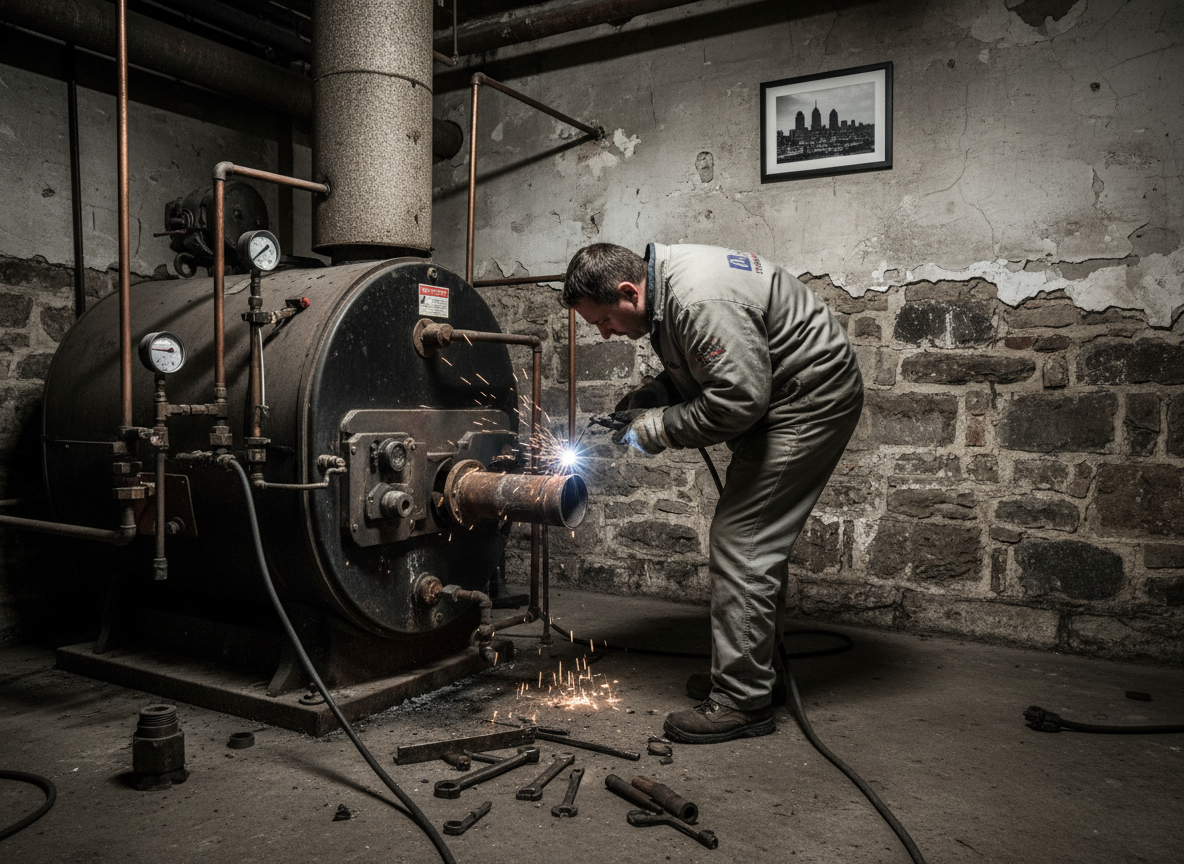
Philadelphia's humid subtropical climate brings cold winters that push boilers in pre-1940 row homes hard, especially in neighborhoods like Kensington, Fishtown, and Germantown where steam systems with cast-iron radiators remain common. These older units often develop leaks at threaded joints or corroded sections after decades of use, and winter temperature swings accelerate wear on expansion tanks and low-water cutoffs. Technicians must account for tight mechanical rooms typical in these properties and follow Philadelphia building codes that require proper venting and combustion air when replacing components.
Hot water boilers in West Philadelphia and University City row homes frequently face circulation issues from sludge buildup in older piping, which reduces efficiency and can trigger safety shutdowns during peak heating demand. Edge cases include handling dual-fuel conversions in homes near the Benjamin Franklin Parkway where gas supply lines run through shared walls, requiring careful isolation to avoid affecting neighboring units. Regular inspection of aquastats and zone valves prevents freeze-ups that damage baseboards when temperatures drop below freezing for extended periods.
Repairs in North Philadelphia and Roxborough often involve accessing boilers installed in basements prone to minor flooding from heavy summer rains, which can corrode electrical controls over time. Technicians check for proper slope on condensate lines and test safety valves under actual operating pressure rather than relying on visual checks alone. Homeowners in these areas benefit from addressing small leaks promptly before they force full system shutdowns during the first cold snap of the season.
Technician insight
In Philadelphia, the thing that catches most people out with Boiler Repair is sludge and scale in the original piping of 1920s–1940s row homes in Kensington and Germantown; winter cold snaps turn small flow restrictions into full no-heat calls because the cast-iron sections cannot shed heat fast enough.
Fishtown Steam Boiler Shutdown
A cold snap left a two-story row home without heat. Inspection revealed a stuck low-water cutoff and minor leak at a threaded joint on the return line. The cutoff was replaced and the joint resealed while the system remained partially drained. Heat was restored the same afternoon with no further leaks during the following freeze.
Boiler Repair Services We Offer
✓Steam Boiler Pressure Adjustments
Calibrate pressuretrols and safety valves on steam systems common in Kensington and Fishtown row homes to maintain safe operating ranges without short cycling.
✓Hot Water Boiler Circulation Repairs
Diagnose and replace failing circulator pumps or clear sludge from lines in University City and West Philadelphia homes where older piping restricts flow.
✓Boiler Heat Exchanger Inspections
Inspect cast-iron sections for cracks in Germantown and Mount Airy properties where age and thermal cycling create hidden failure points during winter loads.
✓Gas Valve and Ignition Fixes
Repair or replace ignition systems and gas valves on boilers serving South Philadelphia and Northern Liberties homes to restore reliable startup after cold-weather outages.
✓Radiator Bleed and Balancing
Bleed air from radiators and balance zones in Center City and Manayunk buildings to eliminate cold spots without draining entire systems.
Boiler Repair Cost in Philadelphia, PA
| Service | Typical Range | What Affects It |
|---|---|---|
| Circulator Pump Replacement | $350–$650 | Price rises with pump type and piping access in older basements |
| Gas Valve Replacement | $275–$500 | Depends on boiler model and gas line configuration |
| Pressuretrol Adjustment or Swap | $150–$325 | Lower end for calibration; higher when part must be sourced same-day |
| Radiator Bleed and Zone Balancing | $125–$275 | Varies by number of zones and air trapped in multi-story homes |
Ranges are typical for Philadelphia, PA and confirmed with an exact written quote before any work starts.
How it works
- 1
On-Site Assessment
Technician inspects the boiler, piping, and controls in the actual mechanical space while noting neighborhood-specific factors like shared walls or basement moisture.
- 2
Component Testing
Pressure test valves, check aquastats, and verify combustion air supply under load before any disassembly.
- 3
Targeted Repair
Replace or rebuild only the failed parts such as valves, pumps, or sections while protecting surrounding finishes in tight row-home basements.
- 4
System Verification
Restart the boiler, confirm even heat delivery to all zones, and review safe operation with the homeowner.
Pricing
Upfront quotes provided after inspection; typical repairs vary with boiler age and access in Philadelphia row homes.