
2026-10-28 · Tony DeLuca
Addressing Musty Odors from AC Units in Humid Basements
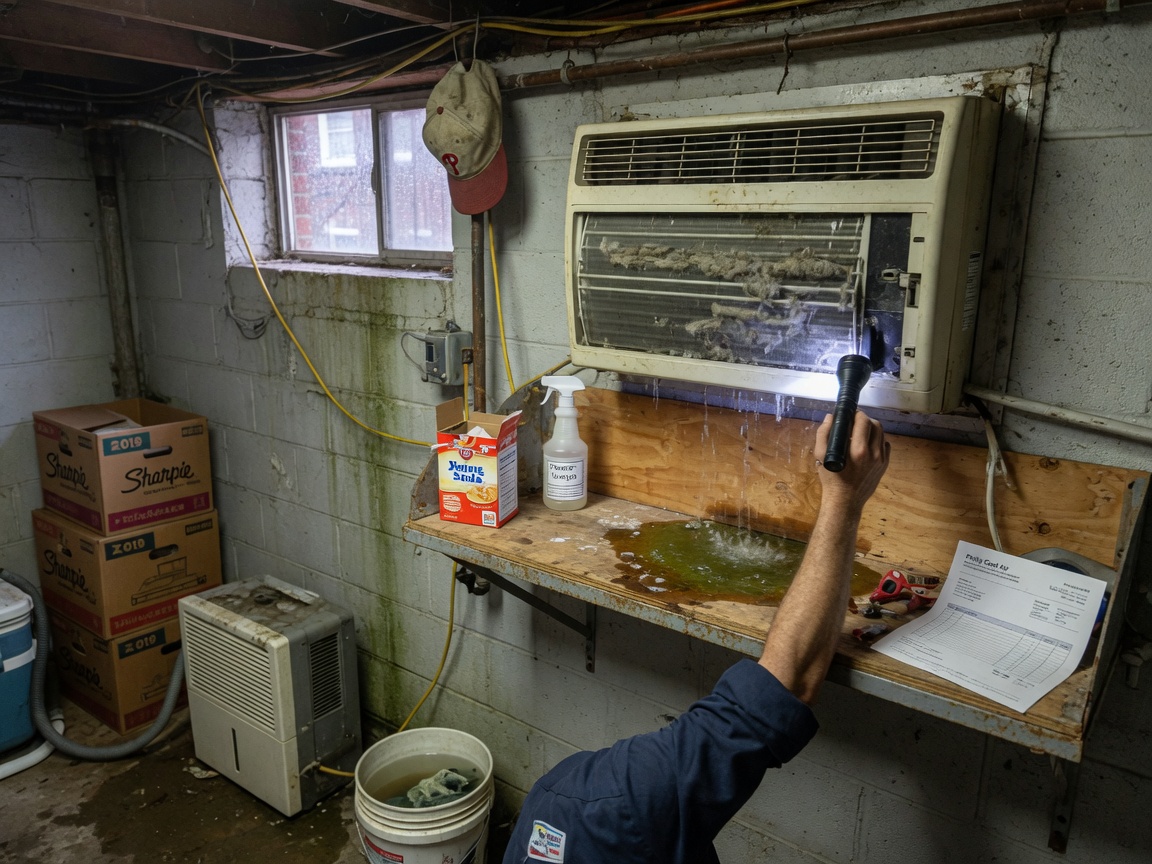
Musty odors from AC units in Philadelphia basements typically clear after thorough evaporator coil cleaning, drain line flushing, and adding a 50-pint dehumidifier when relative humidity exceeds 60 percent. These steps address the root causes tied to the region's humid subtropical climate with hot summers and cold winters that drive condensation in below-grade spaces. Row homes in neighborhoods such as South Philadelphia and Kensington often feature stone foundations and limited airflow that trap moisture around equipment. West Philadelphia and Germantown properties built before 1950 commonly have shallow basements where standing water from summer storms feeds mold growth on coils and pans. Addressing the odor starts with shutting off the system, inspecting for visible slime in the condensate line, and confirming the float switch operates correctly to prevent overflow.
Identifying Moisture Sources in Local Basements
Philadelphia's summer humidity frequently pushes basement levels above 65 percent, allowing water vapor to condense on cold AC coils and create the perfect environment for mold. Older homes in Center City and Northern Liberties often lack modern vapor barriers, so groundwater seeps through mortar joints during heavy rains. Cold winters exacerbate the problem when warm indoor air meets chilled basement walls, increasing condensation on metal components. Check the condensate pan for standing water and test the drain line by pouring a cup of water to verify flow. In Fishtown and University City row homes, shared walls limit cross-ventilation, so odors linger longer. Installing a standalone dehumidifier set to 50 percent and routing its drain into the existing condensate line reduces ambient moisture without overloading the AC. Monitor levels with a digital hygrometer placed near the unit for two weeks to confirm the drop.
Cleaning Coils and Drain Lines Effectively
Begin by turning off power at the breaker and removing the access panel to expose the evaporator coil. Spray a no-rinse coil cleaner formulated for mold and allow it to drip into the pan for 10 minutes before flushing. Use a wet/dry vacuum on the condensate line access point near the air handler to clear blockages that commonly form from algae in humid conditions. Replace the air filter with a MERV 8 or higher rated option sized for the system to improve airflow and reduce future buildup. In Manayunk and Roxborough homes with steep lots, exterior drain terminations can clog with leaves, so verify the line exits freely. Repeat the cleaning process every spring before the cooling season begins to prevent recurrence. These steps eliminate the biological source of the odor rather than masking it with sprays.
Improving Ventilation and Humidity Control
Adding mechanical ventilation helps older Philadelphia basements exchange moist air more effectively than passive vents alone. A ventilation system repair can integrate an energy recovery ventilator that brings in drier outdoor air during shoulder seasons. Pair this with an inline fan controlled by a humidistat set at 55 percent to run automatically. In Mount Airy and Germantown stone homes, sealing gaps around duct penetrations prevents humid air from short-circuiting into the basement. Consider linking the dehumidifier to the existing HVAC return so treated air circulates through the system. Indoor air quality testing identifies hidden mold colonies behind walls that contribute to persistent smells. Track results over 30 days with logs of humidity and odor intensity to adjust settings.
When Professional Service Becomes Necessary
Persistent odors after basic cleaning often indicate deeper issues such as leaking ductwork in historic properties or undersized equipment struggling with Philadelphia's summer loads. Review the related guide on how to spot ductwork leaks in historic Philadelphia properties for visual checks around joints in North Philadelphia and Fairmount basements. Schedule service when the condensate pan shows rust or the system short-cycles, both signs that require component replacement. Technicians can measure static pressure and confirm proper refrigerant charge, which affects coil temperature and moisture removal. For properties near the Philadelphia Zoo or along the Benjamin Franklin Parkway, tree pollen and debris accelerate filter loading, so more frequent changes help. Choosing the right filter MERV rating for Philly pollen seasons provides additional guidance on balancing airflow and filtration.
Seasonal Maintenance Practices for Philadelphia Homes
Schedule coil and drain service each April before humidity rises and again in October after the cooling season ends. Keep the area around the air handler clear of stored items that block airflow in tight Kensington and South Philadelphia basements. Test the float switch and replace batteries in any connected thermostats annually. During cold winters, ensure the system runs in fan-only mode periodically to circulate air and prevent stagnation. These routines reduce odor complaints by maintaining consistent moisture removal across the humid summers typical of the region. Homeowners in University City and Northern Liberties report fewer issues when they combine dehumidification with annual professional inspections rather than relying on DIY fixes alone.