
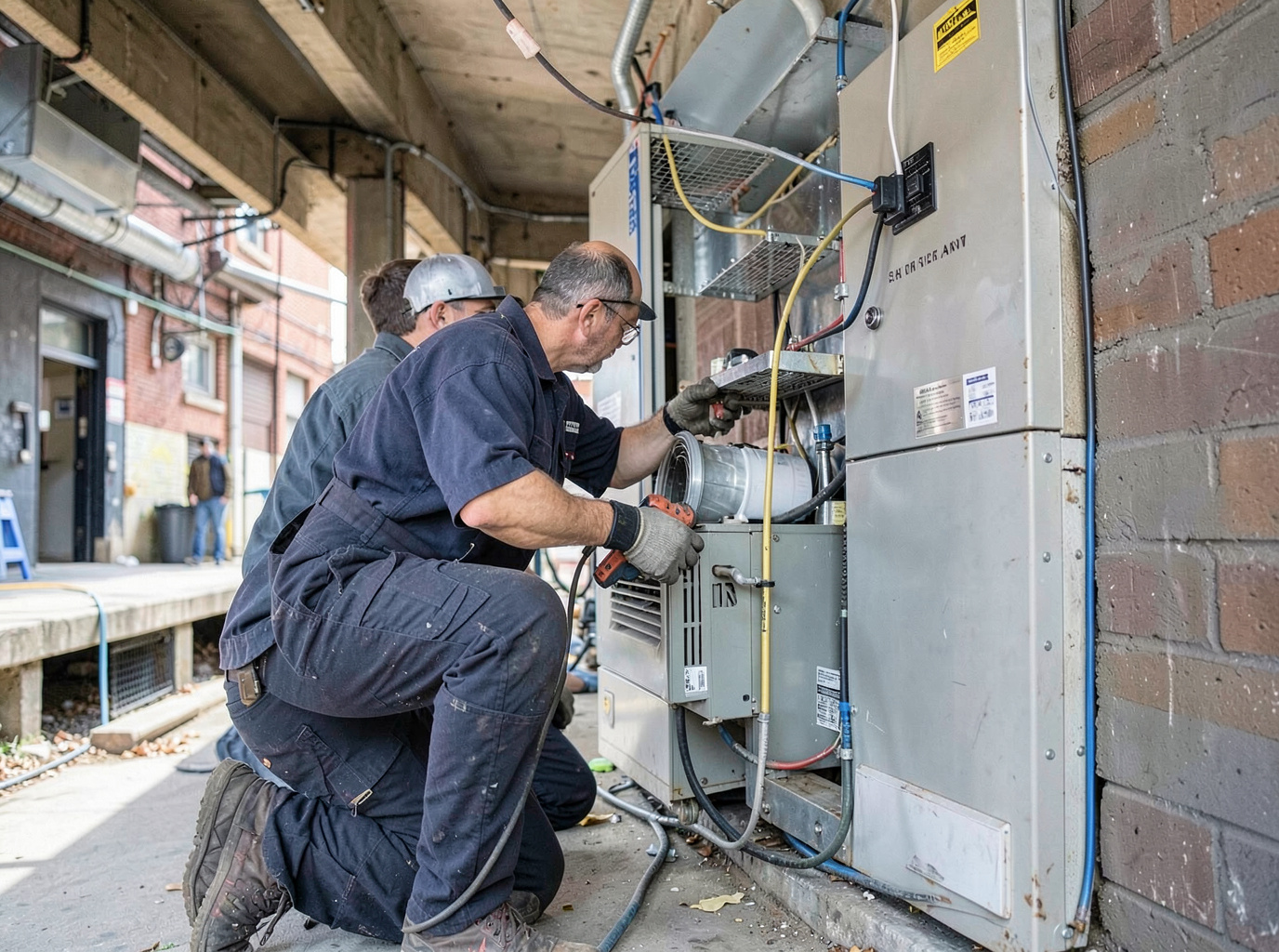
Philadelphia row homes in neighborhoods like Kensington and Northern Liberties often have narrow mechanical rooms and shared walls that limit airflow and placement options. We measure square footage, insulation levels, and existing duct runs on site before selecting equipment tonnage so the system does not short-cycle during the heavy July humidity. Oversized units create moisture problems that lead to mold on basement walls common in these 1920s brick structures.
Many properties in West Philadelphia and Germantown still rely on 60-amp panels and knob-and-tube wiring. We check load calculations against the actual service size and recommend panel upgrades when needed rather than forcing a mismatched condenser that trips breakers on peak summer days. Proper refrigerant line routing through brick exteriors also prevents water intrusion at the penetration points during heavy winter freeze-thaw cycles.
Ductless systems work well for additions or upper floors in Manayunk and Roxborough where running new ducts would disturb finished plaster ceilings. We slope condensate lines correctly to avoid standing water that freezes in the cold winters and bursts lines. Every installation includes a final static pressure test to confirm airflow matches design before we leave the property.
Technician insight
In Philadelphia the thing that catches most people out with air conditioning installation is the narrow side yards and shared walls in South Philadelphia and Kensington row homes. You cannot just drop a standard condenser and expect proper airflow or service access, and many older panels cannot handle the new load without an upgrade that only shows up once we open the panel.
Row Home In South Philadelphia
The homeowner needed cooling for a 1920s brick row house where the existing window units failed every humid summer. We found undersized ducts and a 60-amp panel. We installed a properly sized ductless system with two indoor heads, ran lines through the exterior brick with sealed penetrations, and added a condensate pump. The system now maintains 72 degrees without tripping breakers or creating moisture issues.
Air Conditioning Installation Services We Offer
✓Central Air Conditioning Installation
Full central system replacement sized for Philadelphia row homes that includes new line sets, condensate drains, and integration with existing forced-air furnaces.
✓Ductless Mini-Split Installation
Multi-zone ductless units installed in older homes without ductwork such as those in Fishtown and Northern Liberties where interior walls limit central distribution.
✓High-Efficiency Condenser Replacement
Upgrade to SEER2-rated outdoor units that handle Philadelphia's hot, humid summers while fitting narrow side yards common in South Philadelphia blocks.
✓Whole-Home Humidity Control Integration
Addition of dehumidification tied to new AC equipment to manage moisture in basements of University City and Mount Airy properties during extended summer rains.
✓Attic Air Handler Installation
Compact air handlers placed in finished attics of Germantown and Roxborough homes where basement space is unavailable or already occupied by other mechanicals.
Air Conditioning Installation Cost in Philadelphia, PA
| Service | Typical Range | What Affects It |
|---|---|---|
| Central AC Installation | $5,200–$8,800 | Varies with tonnage, duct modifications, and electrical upgrades common in pre-1960 homes. |
| Ductless Multi-Zone System | $4,800–$9,500 | Depends on number of indoor heads and exterior wall access in tight urban lots. |
| Condenser-Only Replacement | $3,400–$5,900 | Assumes existing lines and air handler are reusable and in good condition. |
Ranges are typical for Philadelphia, PA and confirmed with an exact written quote before any work starts.
How it works
- 1
On-Site Load Calculation
We measure the home, note insulation, window orientation, and any shared-wall heat gain typical in Philadelphia row-house blocks.
- 2
Equipment Selection
Match tonnage and efficiency to the actual cooling load while confirming the electrical panel can support the new unit.
- 3
Duct Or Line Set Preparation
Modify or extend ducts where needed or run refrigerant lines through exterior walls with proper flashing for weather resistance.
- 4
Installation And Testing
Set the equipment, charge the system, perform static pressure and temperature split tests, then verify condensate drainage.
Pricing
Upfront written quotes after the site visit reflect home specifics rather than flat rates.