
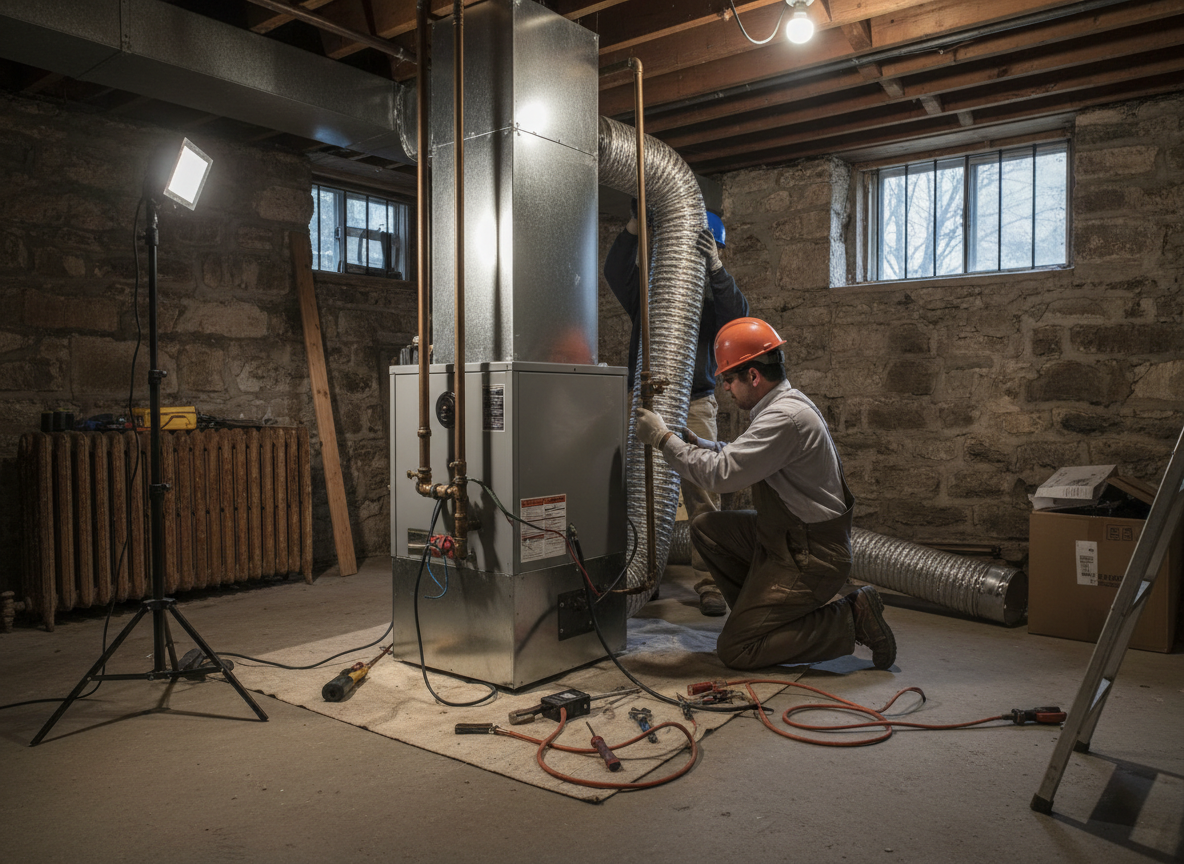
Philadelphia's humid subtropical climate brings cold winters that demand dependable furnace performance in row homes built from the late 1800s through the 1950s. These narrow structures often have limited mechanical space, shared chimneys, and outdated duct runs that require careful sizing to avoid short-cycling or uneven heat. Proper venting and combustion air calculations are critical because many homes still rely on masonry chimneys that can create draft issues when paired with modern high-efficiency units.
We select furnaces based on actual Manual J load calculations rather than rule-of-thumb sizing, accounting for the dense urban heat island effect around Center City, Kensington, and Northern Liberties. Older homes frequently need new condensate drains, upgraded gas lines, or modified return-air paths to meet current Philadelphia mechanical code while preserving the original architecture. Electric ignition and variable-speed blowers improve efficiency in these tight envelopes without oversized equipment that would short-cycle during shoulder seasons.
Installation crews at 1203 N 3rd St coordinate with the narrow streets and limited access common in Manayunk, Roxborough, and Germantown. We pull necessary permits and verify combustion safety with post-install testing because many row homes share party walls that can transmit noise or combustion byproducts if not properly isolated.
Homeowners in University City and Mount Airy often request two-stage or modulating furnaces to handle the rapid temperature swings that occur when cold fronts move through the Delaware Valley. These units maintain steady heat without the loud on-off cycles that disturb neighbors in attached housing.
Technician insight
In Philadelphia the thing that catches most people out with Furnace Installation is the shared chimney and tight mechanical closets in pre-war row homes. You cannot just drop in a high-efficiency unit without addressing draft and combustion air; otherwise you create negative pressure that pulls air from the living space or neighboring units.
South Philadelphia Row Home Furnace Replacement
Homeowner called after the original gravity furnace failed during a January cold snap. We found the chimney flue too narrow for a condensing unit and the return duct blocked by later renovations. Crew installed a two-stage 96% furnace with a new PVC vent through the sidewall, added a properly sized return drop, and balanced the system for even heat across the three floors.
Furnace Installation Services We Offer
✓Gas Furnace Installation
Install new natural gas furnaces sized for Philadelphia row homes, including venting modifications for shared chimneys and combustion air compliance.
✓High-Efficiency Furnace Replacement
Replace older units with 95+ AFUE models that fit existing ductwork constraints while improving efficiency in cold winter conditions.
✓Electric Furnace Installation
Fit electric furnaces in homes without gas service, common in parts of West Philadelphia and University City, with proper electrical upgrades.
✓Furnace Sizing and Load Calculation
Perform room-by-room Manual J calculations to prevent oversizing in tight Philadelphia row homes and ensure even heat distribution.
✓Ductwork Modification for New Furnaces
Adjust or extend existing duct runs to accommodate modern furnace dimensions without major renovation in older South Philadelphia and Fishtown properties.
Furnace Installation Cost in Philadelphia, PA
| Service | Typical Range | What Affects It |
|---|---|---|
| Standard 80% AFUE Gas Furnace Install | $3,200–$4,800 | Simpler jobs in homes with existing venting; higher in row homes needing chimney liners. |
| 95%+ AFUE Furnace with New Venting | $4,500–$6,800 | Includes condensate pump and PVC venting common in older Philadelphia construction. |
| Electric Furnace Installation | $2,800–$4,200 | Price varies with required electrical panel upgrades in West Philadelphia homes. |
| Ductwork Modifications | $600–$1,800 | Added when existing runs cannot support new equipment airflow. |
Ranges are typical for Philadelphia, PA and confirmed with an exact written quote before any work starts.
How it works
- 1
Site Assessment
Technician inspects the existing system, measures the home, and evaluates chimney condition and duct layout in the specific Philadelphia neighborhood.
- 2
Equipment Selection
Recommend furnace model and efficiency rating based on load calculation, available space, and fuel type for the property.
- 3
Permit and Preparation
Secure required permits and prepare the mechanical space, including any needed gas line or electrical upgrades.
- 4
Installation and Testing
Remove old unit, set new furnace, connect venting and controls, then perform combustion and safety testing before final startup.
Pricing
Most Philadelphia furnace installations fall in the mid-four-figure range; final price depends on efficiency rating, venting complexity, and any duct or electrical work needed.