
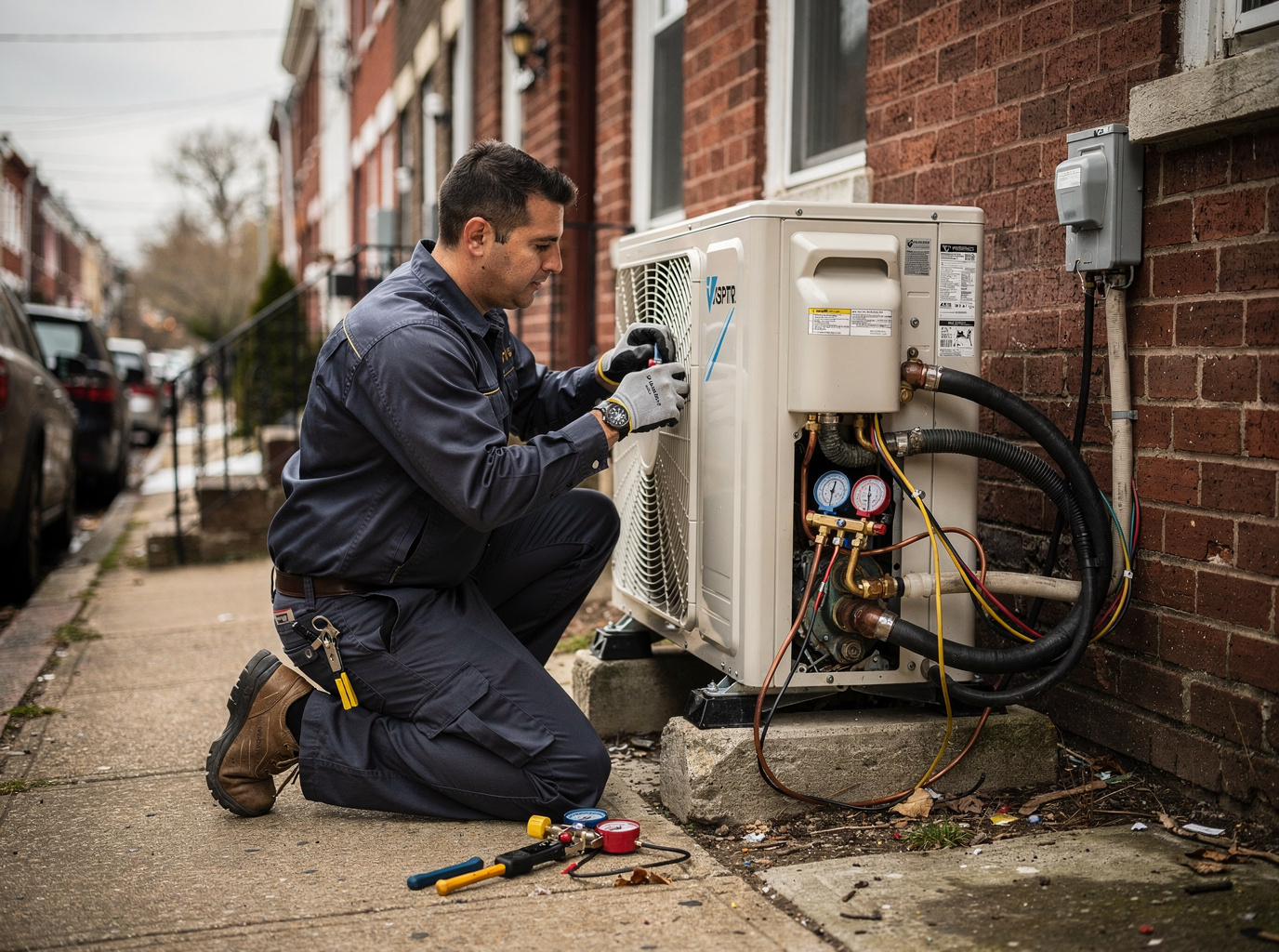
Philadelphia's dense stock of pre-war row homes in neighborhoods like Fishtown, Kensington, and Northern Liberties often features narrow mechanical spaces and outdated ductwork that complicate heat pump placement. Installers must account for limited attic or basement clearance while ensuring proper refrigerant line routing through shared walls. Humid subtropical conditions mean systems need strong dehumidification modes during July and August peaks, while winter lows near the Delaware River require units sized for efficient heating without excessive auxiliary strip heat.
Code requirements in Philadelphia County emphasize proper condensate drainage and electrical disconnect placement to prevent issues in tight urban lots. Heat pumps installed near the Schuylkill or in low-lying South Philadelphia blocks must handle occasional flooding risks with elevated outdoor units. Homeowners in West Philadelphia and University City frequently request retrofits that integrate with existing hot-water baseboard systems, requiring careful load calculations to avoid short-cycling during shoulder seasons.
Nearby cities such as Camden and Trenton share similar brick construction challenges, but Philadelphia's stricter permitting on refrigerant handling adds an extra verification step before startup. Proper placement of the outdoor condenser away from narrow alleys prevents airflow restrictions that reduce efficiency in summer heat.
Technicians verify existing electrical service capacity, especially in Germantown and Mount Airy homes with older panels, before committing to inverter-driven models that demand stable voltage.
Technician insight
In Philadelphia, the thing that catches most people out with Heat Pump Installation is the narrow mechanical rooms and shared walls in row homes from Fishtown to South Philadelphia. Condensate lines often have to run through multiple floors or along alley walls, and winter humidity from the river can freeze drains if not pitched correctly from day one.
Fishtown Row Home Retrofit
Homeowner in a 1920s Fishtown row house struggled with uneven heating and high electric bills from window units. Inspection revealed limited basement clearance and outdated wiring. We installed a two-zone ductless system with lines routed through an exterior chase, added a condensate pump, and tied it to the existing 100-amp panel upgrade. The home now maintains steady temperatures through summer humidity and January cold snaps without auxiliary heat overuse.
Heat Pump Installation Services We Offer
✓Ductless Mini-Split Heat Pump Installation
Ideal for Philadelphia row homes without existing ducts, these systems deliver zoned comfort in individual rooms while minimizing disruption to plaster walls common in Center City and South Philadelphia.
✓Central Heat Pump System Installation
Full replacement of older forced-air furnaces with high-efficiency central heat pumps suited to larger Manayunk and Roxborough properties that already have ductwork in place.
✓Heat Pump Replacement in Older Homes
Targeted swaps in pre-1950 Kensington and Northern Liberties buildings where existing refrigerant lines and electrical runs must be evaluated for compatibility with modern variable-speed equipment.
✓Hybrid Heat Pump with Gas Backup Installation
Combines electric heat pump efficiency with existing gas furnaces for reliable performance during Philadelphia's coldest winter stretches in North Philadelphia and Germantown.
✓Heat Pump Installation for Additions and Sunrooms
Dedicated systems for new construction or enclosed spaces in University City and Mount Airy where extending main HVAC is impractical due to building layout.
Heat Pump Installation Cost in Philadelphia, PA
| Service | Typical Range | What Affects It |
|---|---|---|
| Ductless Mini-Split Installation | $3,200–$6,800 | Varies by number of zones and outdoor unit location in tight row-home lots |
| Central Heat Pump Installation | $5,500–$9,500 | Includes duct modifications common in older Philadelphia homes |
| Hybrid System Add-On | $2,800–$4,200 | Price shifts with gas furnace integration work required |
| Electrical Service Upgrade | $1,100–$2,400 | Needed when panel capacity is insufficient in pre-war buildings |
Ranges are typical for Philadelphia, PA and confirmed with an exact written quote before any work starts.
How it works
- 1
Site Assessment
Technician inspects the home's mechanical space, electrical panel, and duct or line-set routes in the specific Philadelphia neighborhood to identify clearance or load issues.
- 2
Load Calculation And Equipment Selection
Manual J calculations account for the building's age, insulation, and exposure to account for humid summers and cold Delaware River winters before selecting the right capacity.
- 3
Permitting And Preparation
Necessary Philadelphia permits are pulled and any required electrical or condensate modifications are completed prior to equipment arrival.
- 4
Installation And Commissioning
Outdoor and indoor units are set, lines are pressure-tested, and the system is charged and tested under load to confirm proper operation in local conditions.
Pricing
Upfront quotes after on-site inspection; final cost depends on home access, existing infrastructure, and equipment efficiency rating.