
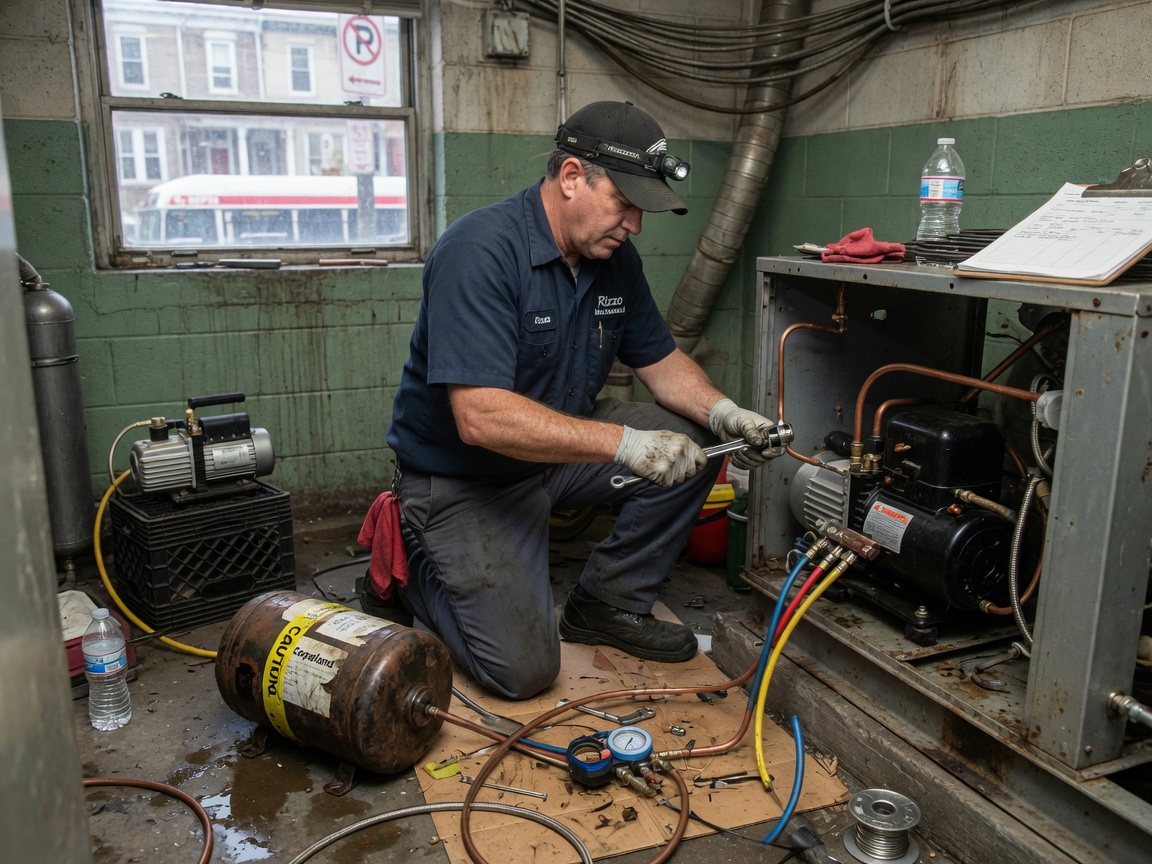
Philadelphia row homes built before 1950 in neighborhoods like Kensington and Northern Liberties often have limited mechanical space and outdated 60-amp panels that complicate compressor swaps. Hot humid summers drive continuous runtime on R-22 and R-410A units, accelerating wear on start capacitors and contactors. Techs must verify line-set integrity and oil return before charging because brick basements trap moisture that can contaminate new refrigerant.
West Philadelphia and University City properties frequently sit on uneven lots with partial basements, forcing awkward crane or stairwell maneuvers during removal. Code requires proper disposal of recovered refrigerant and updated disconnects within sight of the unit. Skipping these steps risks failed inspections when selling homes near the Benjamin Franklin Parkway.
Manayunk and Roxborough hillside homes experience greater temperature swings that stress reversing valves and crankcase heaters. Matching the new compressor’s BTU rating to the existing evaporator prevents short-cycling in shoulder seasons. Always pressure-test to 450 psi after brazing because older copper lines in these areas show pinhole leaks from decades of vibration.
Center City high-rises and converted warehouses need low-ambient controls and vibration isolation pads to satisfy building management rules. Technicians confirm condenser pad drainage before final startup because summer storms can flood low-lying pads near the Schuylkill.
Technician insight
In Philadelphia, the thing that catches most people out with Compressor Replacement is the 60- or 100-amp panels common in pre-war row homes in Kensington and Northern Liberties. These panels often lack a proper outdoor disconnect, forcing an extra service call before the new compressor can be energized.
Kensington Rowhome Compressor Failure
A 1920s rowhome in Kensington lost cooling during a July heat wave. The existing R-22 compressor had seized and contaminated the lines with acid. We recovered refrigerant, flushed the lines, installed a new R-410A compressor and TXV, then pressure-tested and charged. The system now runs quietly with proper superheat even on humid days.
Compressor Replacement Services We Offer
✓Residential Compressor Replacement
Direct swap of failed compressors in single-family row homes across South Philadelphia and Fishtown while preserving existing line sets where possible.
✓R-22 to R-410A Retrofit
Full system conversion including new compressor, metering device, and flush when older units in Germantown reach end of life.
✓Commercial Compressor Replacement
Replacement of scroll and reciprocating compressors on rooftop units serving small retail spaces in Northern Liberties and University City.
✓Crankcase Heater Installation
Addition of crankcase heaters to protect new compressors during cold Philadelphia winters in unconditioned spaces like Mount Airy basements.
✓Refrigerant Line Set Flush
Chemical flush and nitrogen purge of existing lines to remove contaminants before installing a new compressor in older Kensington homes.
Compressor Replacement Cost in Philadelphia, PA
| Service | Typical Range | What Affects It |
|---|---|---|
| Standard Residential Compressor Swap | $900–$1600 | R-410A units in accessible South Philadelphia basements |
| R-22 Retrofit Package | $1400–$2200 | Includes new metering device and flush for pre-2010 systems |
| Electrical Disconnect Upgrade | $250–$450 | Required when panel lacks proper disconnect near unit |
| Line Set Flush Add-On | $175–$325 | Needed when oil breakdown is present |
Ranges are typical for Philadelphia, PA and confirmed with an exact written quote before any work starts.
How it works
- 1
Site Assessment
Technician inspects electrical service, line-set condition, and access in the specific Philadelphia neighborhood before quoting.
- 2
Recovery And Removal
Recover refrigerant per EPA rules, isolate power, and extract the failed compressor while protecting surrounding brick or siding.
- 3
Installation And Brazing
Mount new compressor, braze connections under nitrogen, install new filter-drier, and pressure test the circuit.
- 4
Evacuation And Charging
Pull deep vacuum, weigh in factory-specified charge, and verify superheat and subcooling under local load conditions.
- 5
Startup And Documentation
Run system through cycles, confirm safety controls, and leave written notes on any panel or disconnect upgrades needed.
Pricing
Pricing varies by access difficulty in row homes, refrigerant type, and whether electrical upgrades are required.