
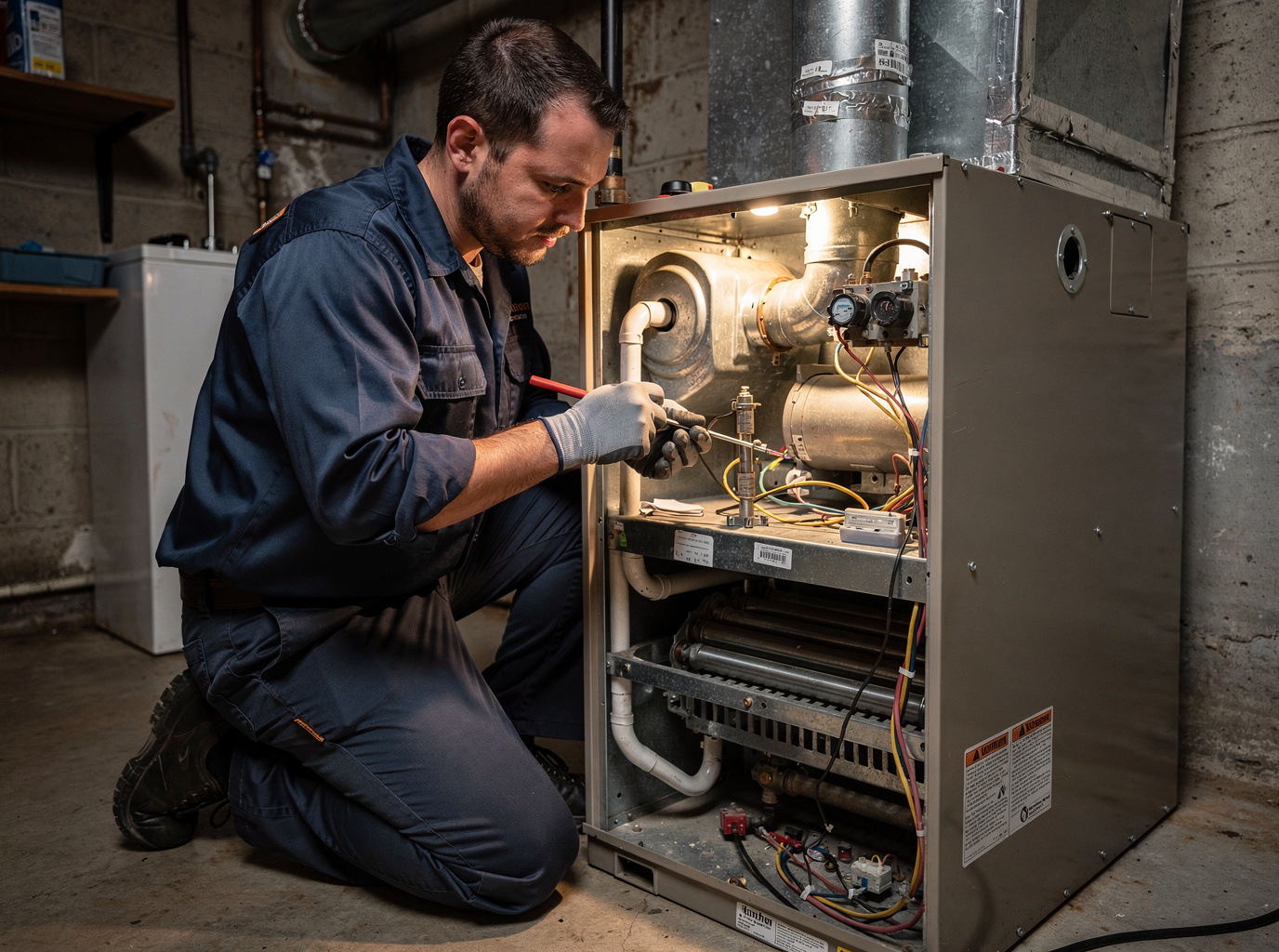
Philadelphia rowhomes built before 1950 often have furnaces tucked in tight basements with limited airflow. Dust from nearby streets like those in Fishtown and Kensington settles on the flame sensor rod, creating a thin oxide layer that prevents the control board from reading flame presence. In winter when temperatures drop below freezing, this causes short cycling that leaves homes without heat overnight. Technicians carry replacement rods and emery cloth on every truck because cleaning alone fails once pitting appears on the metal.
High summer humidity in the Delaware Valley accelerates corrosion on older hot-surface igniters paired with flame sensors. Homes in University City and West Philadelphia near the Schuylkill River experience more frequent sensor failures after heavy rain because moisture migrates through unsealed combustion air intakes. Code requires the sensor to prove flame within four seconds; any delay trips the lockout. We test microamp readings on every service call to catch weak signals before the board shuts down the gas valve.
Northern Liberties and Manayunk properties converted from coal to gas still carry original flue configurations that can backdraft during high winds off the river. This introduces soot that coats the sensor faster than in newer construction. We always verify proper draft with a manometer before reassembly and note any chimney liner issues that would require a separate mason referral.
Technician insight
In Philadelphia the thing that catches most people out with flame sensor repair is the soot load from older chimneys in North Philadelphia and Kensington rowhomes. Cold winter wind pushes exhaust back down the flue and coats the rod within a single season. We always check draft before we leave because cleaning alone will not last if the chimney is pulling wrong.
Fishtown Rowhome Short Cycling
A 1920s Fishtown rowhome lost heat during a January cold snap. The furnace would ignite then shut down within thirty seconds. We found heavy soot on the flame sensor from backdrafting through the original chimney. After replacing the sensor and confirming proper draft with a manometer, the furnace completed full cycles without lockout.
Flame Sensor Repair Services We Offer
✓Furnace Flame Sensor Cleaning
Removes oxide and soot buildup from the rod so the control board registers flame reliably during cold starts.
✓Flame Sensor Replacement
Installs a new sensor when pitting or corrosion prevents accurate microamp readings on older Philadelphia furnaces.
✓Ignition System Diagnostics
Measures sensor output and checks wiring to the board in rowhomes where tight access complicates troubleshooting.
✓Gas Valve and Sensor Coordination
Confirms the valve opens only after the sensor proves flame, preventing raw gas release in humid basement conditions.
✓Hot Surface Igniter and Sensor Pairing
Replaces both components together when humidity-related corrosion has damaged the igniter in South Philadelphia homes.
Flame Sensor Repair Cost in Philadelphia, PA
| Service | Typical Range | What Affects It |
|---|---|---|
| Sensor Cleaning Only | $175–$250 | Rowhome access and soot level affect time on site |
| Sensor Replacement | $225–$325 | Includes new rod and testing; older units may need igniter too |
| Full Ignition Diagnostics | $275–$425 | Covers board readings and wiring checks in tight basements |
Ranges are typical for Philadelphia, PA and confirmed with an exact written quote before any work starts.
How it works
- 1
Safety Shutoff And Access
Turn off gas and power at the furnace, then remove the burner compartment panel in the often cramped basements common to Philadelphia rowhomes.
- 2
Sensor Removal And Inspection
Disconnect the wire, unscrew the sensor, and check for pitting, bending, or heavy soot that indicates draft or combustion issues.
- 3
Cleaning Or Replacement
Clean the rod with emery cloth or install a new sensor, then verify microamp output falls within manufacturer specs before reassembly.
- 4
Test Fire And Draft Check
Restore power and gas, run the furnace through a full cycle, and confirm proper draft to prevent future sensor fouling.
Pricing
Most flame sensor repairs in Philadelphia fall between $175 and $425 depending on whether replacement parts and additional diagnostics are required.