
Philadelphia’s humid subtropical climate pushes thermostats hard. Hot, sticky summers drive constant cooling calls while sharp winter drops below freezing force heating systems to cycle frequently. In row homes built before 1950 that dominate Center City, South Philadelphia and Kensington, original low-voltage wiring often runs through plaster and knob-and-tube remnants. A single loose connection or corroded terminal from years of attic heat and basement dampness can make a thermostat read five to eight degrees off, causing short cycling or rooms that never reach set point.
Smart thermostats add another layer in Northern Liberties and University City renovations. Many older 18- and 24-volt systems lack a common wire, so installers must pull new cable or install a power extender kit. We see frequent failures where Wi-Fi signal drops in brick row homes or where the C-wire adapter was spliced incorrectly during a quick DIY swap. Heat pumps common in newer Manayunk and Roxborough properties require precise outdoor sensor calibration; a mis-set balance point can leave the auxiliary strips running unnecessarily during January cold snaps.
Code requirements in Philadelphia also affect repairs. Any new low-voltage wiring must meet current NEC standards and pass inspection if walls are opened. We always verify transformer output and check for voltage drop across long runs typical in three-story homes in Germantown and Mount Airy before replacing the stat itself. This prevents callbacks when the new unit powers up but the old transformer cannot handle the load.
Technician insight
In Philadelphia the thing that catches most people out with thermostat repair is the 60- to 80-year-old low-voltage wiring running through plaster in row homes. One bad splice in the basement or attic can make a brand-new smart stat act erratic, especially once winter humidity condenses on the terminals.
Fishtown row home short cycling
Homeowner in a 1920s Fishtown row home reported the furnace running only five minutes then shutting off. We found a corroded splice in the original thermostat wire behind a second-floor closet. After replacing the run and installing a new digital thermostat the system completed full cycles and held temperature through the next cold snap.
Thermostat Repair Services We Offer
✓Digital Thermostat Replacement
Swap outdated mercury or mechanical thermostats for modern digital models compatible with Philadelphia’s mix of forced-air, boiler and heat-pump systems.
✓Smart Thermostat Installation
Install and configure Wi-Fi or learning thermostats, including C-wire solutions for older row homes in Center City and Fishtown without running new cable where possible.
✓Thermostat Wiring Repair
Trace and repair damaged low-voltage wiring, loose splices and corroded terminals common in pre-1970s Philadelphia housing stock.
✓Programmable Thermostat Calibration
Reprogram and fine-tune existing programmable units to match actual room loads and Philadelphia’s wide seasonal temperature swings.
✓Heat Pump Thermostat Repair
Diagnose and fix balance-point and auxiliary-heat settings on heat-pump thermostats serving Manayunk and Roxborough properties.
✓Boiler Thermostat Replacement
Replace and wire single-stage or multi-stage boiler thermostats found in many South Philadelphia and West Philadelphia row homes.
Thermostat Repair Cost in Philadelphia, PA
| Service | Typical Range | What Affects It |
|---|---|---|
| Diagnostic visit | $95–$150 | Covers testing at stat and equipment; applied to repair if work proceeds same day |
| Wiring repair only | $175–$325 | Varies with access in older plaster walls and length of run |
| Digital thermostat replacement | $250–$450 | Includes new stat, basic programming and testing; higher for smart models |
| Smart thermostat install with C-wire solution | $350–$550 | Covers power extender kit or new cable pull in row homes |
Ranges are typical for Philadelphia, PA and confirmed with an exact written quote before any work starts.
How it works
- 1
On-Site Diagnosis
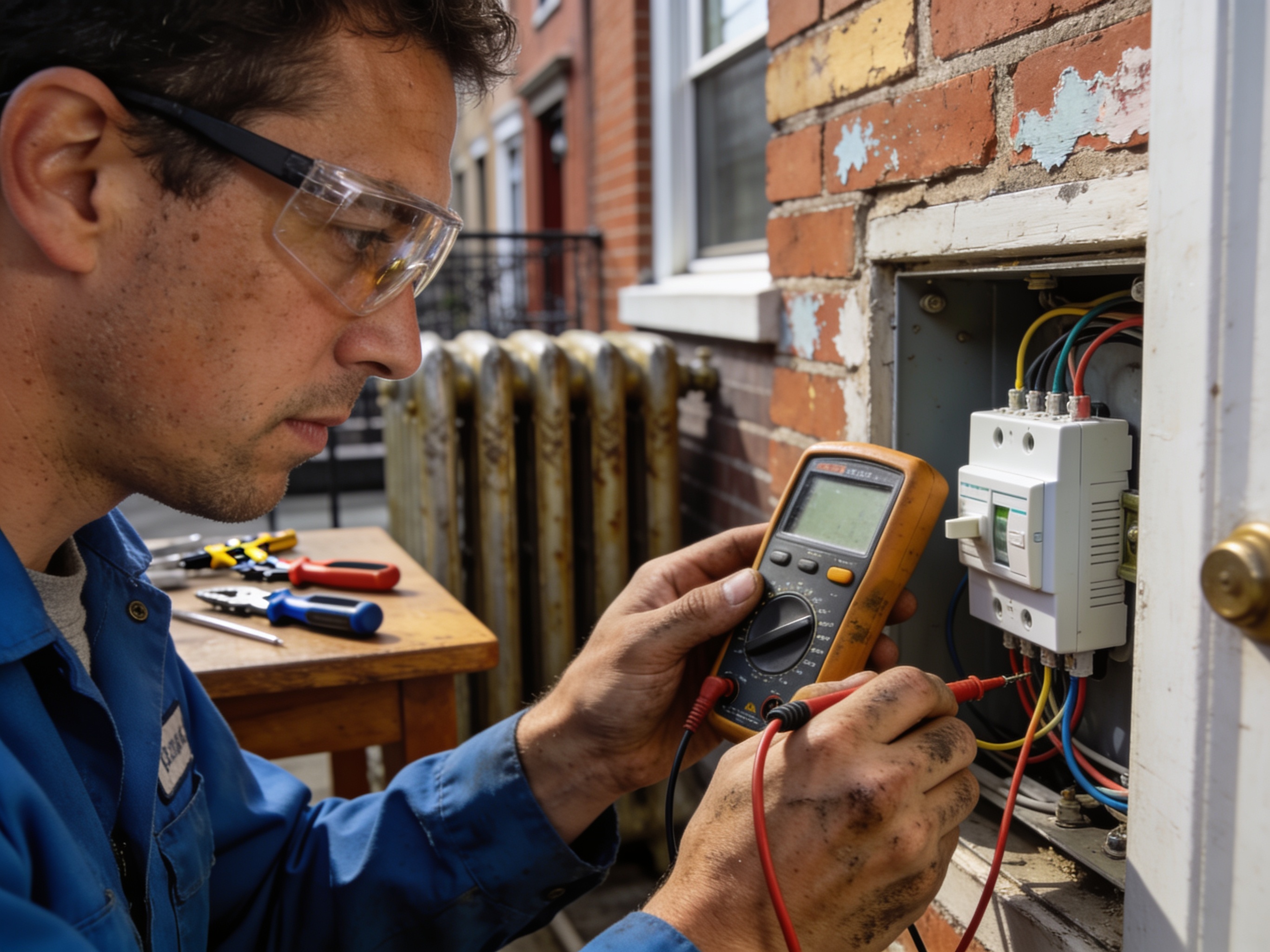
We arrive with a multimeter and check voltage at the transformer, thermostat base and equipment terminals before any parts are touched.
- 2
System Compatibility Check
We confirm the existing wiring and equipment type against the new thermostat specifications, noting any missing C-wire or heat-pump staging needs.
- 3
Repair Or Replacement
Loose connections are tightened, damaged wire is replaced, or the thermostat is swapped and programmed to local seasonal settings.
- 4
Final Verification
We run the system through a full cycle in both heating and cooling modes and confirm accurate temperature reading at the stat.
Pricing
Most thermostat repairs fall between diagnostic visit and full replacement. Final price depends on wiring condition and whether a new unit is required.